
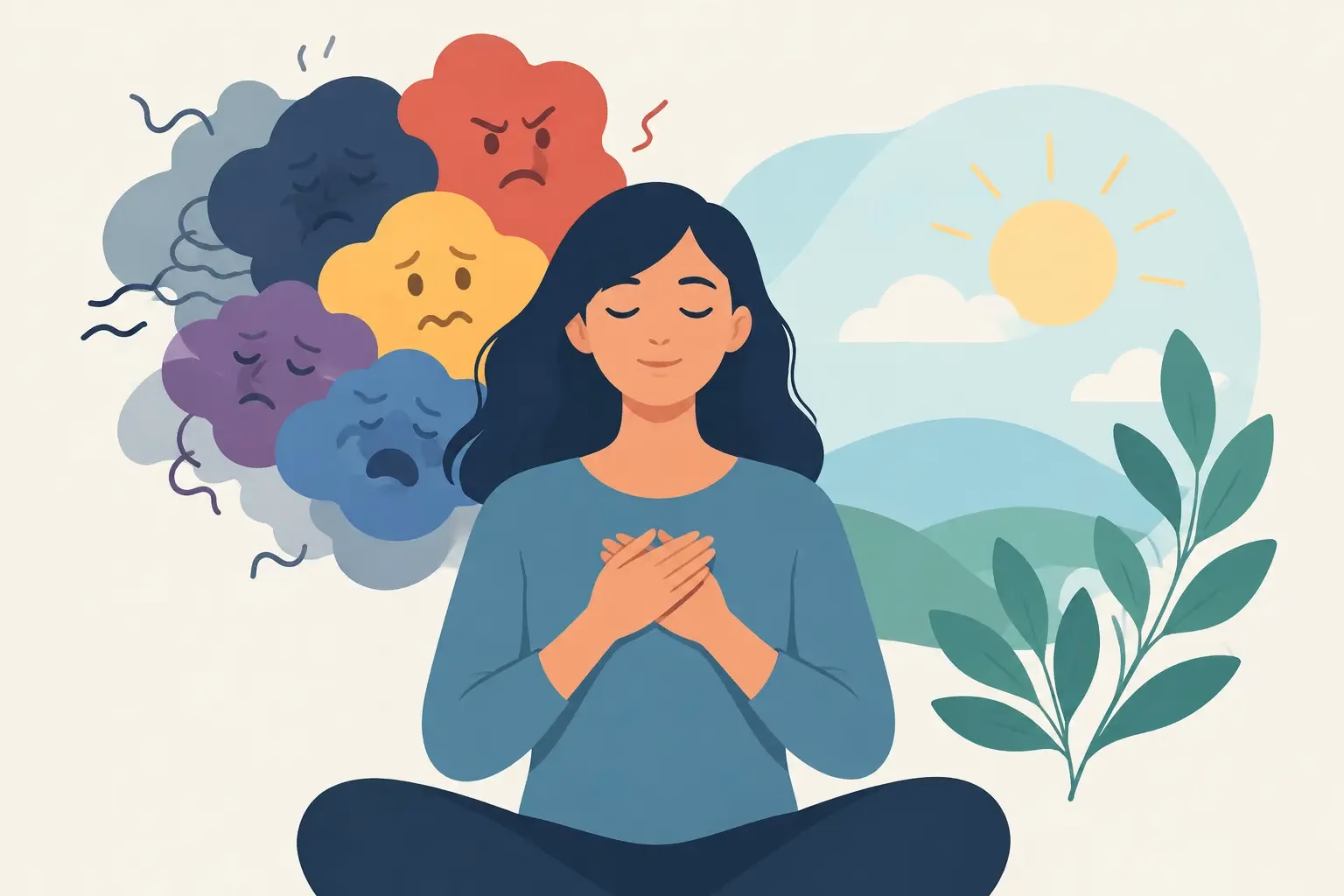
Emotional Regulation When Feelings Feel Too Much
Some feelings arrive with such force that they seem to take over the whole room. A sharp message from someone you love, a difficult meeting, a memory you did not expect, or simply one demand too many can leave you anxious, angry, numb or tearful. Emotional regulation is the ability to meet those moments with a little more space and choice. It is not about becoming endlessly calm, or pretending that something painful does not matter.
For many people, the difficulty is not that they feel too much. It is that they have had to carry those feelings alone, for too long, without a safe way to understand or express them. There is nothing weak or shameful about finding emotions hard to manage. Often, they are asking for care, attention and a gentler response.
What emotional regulation really means
Emotional regulation is the process of noticing what you feel, understanding some of what has stirred it, and choosing how to respond rather than being entirely swept along by the feeling. Sometimes that might mean pausing before replying to an upsetting text. At other times, it may mean allowing yourself to cry, saying no to another commitment, or recognising that anger is protecting a hurt part of you.
It is not emotional suppression. Suppression asks you to push feelings down, ignore them or perform being fine. This can bring short-term relief, especially when you need to get through work or care for others, but feelings that are repeatedly dismissed often return as tension, exhaustion, irritability, disconnection or a sense of being overwhelmed by something you cannot name.
Nor is regulation about never reacting. Strong emotion is a normal human response to loss, fear, injustice, disappointment and closeness. The aim is not to remove your emotional life. It is to feel it without losing all access to your judgement, values and sense of self.
Why feelings can become hard to manage
Our capacity to regulate does not develop in isolation. It is shaped by our nervous system, our relationships and the experiences we have lived through. If, growing up, your emotions were ignored, criticised or treated as inconvenient, you may have learned to hide them. If you had to stay alert to conflict or unpredictability, your body may still move quickly into alarm, even when your mind knows you are safe.
Stress also narrows the space available for reflection. Burnout, poor sleep, grief, financial pressure, relationship strain, addiction, hormonal changes and physical illness can all make ordinary frustrations feel much bigger. When you are already running on empty, there is less capacity to pause and decide what you need.
Trauma can make this especially confusing. A present-day situation may carry an echo of an earlier experience, and the body can react before you have consciously made sense of why. You might suddenly feel panicked, shut down, defensive or far away from yourself. These responses are not evidence that you are failing. They can be protective patterns that once helped you cope.
Begin with noticing, not fixing
When an emotion is intense, trying to reason yourself out of it immediately can feel impossible. A more realistic first step is to name what is happening with kindness. You might quietly say: “I am really activated right now,” or “Something in this has hurt me.” Naming an experience does not solve it, but it can create a small amount of distance between you and the feeling.
Notice the body as well. Is your chest tight? Is your jaw clenched? Do you feel restless, hot, heavy or numb? Slowing your breathing slightly, placing both feet on the floor, holding a warm drink or looking around the room and identifying familiar objects can help signal safety to a nervous system that has gone into high alert. These are not magic techniques, and they may not be enough when distress is severe. They are simple ways of giving yourself a steadier place to begin.
It can also help to ask what the feeling is asking for. Anxiety may be asking for reassurance, rest or clearer information. Anger may be asking for a boundary. Sadness may be asking to be witnessed rather than hurried away. The answer will not always be obvious, but approaching your feelings with curiosity can be more helpful than meeting them with criticism.
Create a pause before you act
The most difficult moments are often the ones that invite an immediate response: sending the message, having another drink, cancelling plans, withdrawing from someone you care about, spending money, or saying something you later regret. A pause will not make every decision easy, but it can interrupt the feeling that there is only one possible action.
If you can, give yourself a short period before acting. Step into another room, take a brief walk, wash your face, write down what you want to say without sending it, or tell someone you need time to think. The purpose is not avoidance. It is to let the first surge of emotion settle enough for you to choose what serves you best.
This looks different for different people. For someone who tends to shut down, regulation may mean staying present long enough to share one honest sentence. For someone who tends to over-explain or pursue reassurance, it may mean tolerating a little uncertainty before reaching out. There is no single perfect response. The question is whether your next step moves you towards care, safety and self-respect.
Build emotional regulation in ordinary moments
Regulation is easier when it is practised outside a crisis. Small, consistent acts of care can make a meaningful difference to how much your system has to carry. Regular food, rest, movement, time away from screens and contact with people who feel safe may sound basic, but they are not trivial when you are emotionally stretched.
A short check-in at the end of the day can be useful too. Rather than judging yourself, consider: what was difficult today, what helped, and what might I need tomorrow? Over time, you may start to recognise patterns. Perhaps you become more irritable when you have not had time alone, more anxious after certain conversations, or more likely to feel numb when you are overtired.
It may also help to widen your emotional vocabulary. “Fine”, “stressed” and “bad” can cover a great deal. Are you disappointed, lonely, embarrassed, unsafe, resentful, helpless or grieving? More precise language can make it easier to understand what you need and to communicate it to others.
When coping strategies are not enough
Self-help can be supportive, but it has limits. If emotions regularly feel unmanageable, if you are relying on alcohol, drugs, self-harm or other behaviours to get through, or if you are living with panic, dissociation, intrusive memories or persistent numbness, you deserve more than having to manage alone.
Therapy offers a confidential space to slow down and make sense of what sits beneath the reaction. This is not about being told to control yourself better. In a compassionate therapeutic relationship, you can begin to understand the patterns your mind and body have learned, including the ones that once kept you safe but now leave you feeling trapped.
An integrative approach can draw on different ways of working according to what you need. For some people, the focus may be on practical tools for the immediate moments of overwhelm. For others, it may be on relationships, attachment, loss or trauma. The pace matters. You should not have to force yourself into painful material before you feel ready enough to approach it.
If you are in immediate danger, feel unable to keep yourself safe, or are at risk of harming someone else, seek urgent support through emergency services or an appropriate local crisis service. Reaching out in that moment is a protective act, not a burden.
A gentler relationship with yourself
There may be times when you regulate well and times when you do not. That is part of being human, particularly when life is demanding or old wounds have been touched. Progress is rarely a straight line, and expecting perfect calm can become another way to turn against yourself.
A more helpful measure is whether you are becoming able to return to yourself with less fear and less shame. Perhaps you notice your anger sooner. Perhaps you apologise after a difficult reaction without abandoning your own needs. Perhaps you ask for support before reaching breaking point. These shifts may be quiet, but they matter.
You do not have to earn compassion by handling everything perfectly. At your own pace, it is possible to build a steadier relationship with your feelings – one where they can be heard without having to run your life.