Burnout Counselling Online UK: What Helps
Some people reach burnout with a crash. Others arrive there quietly, after months of pushing through, sleeping badly, feeling flat, and telling themselves they just need a proper rest. If you are looking for burnout counselling online UK, there is a good chance things have already felt heavy for longer than you wanted to admit.
Burnout is often spoken about as if it only belongs to high-pressure jobs, but the reality is usually broader than that. It can grow from work stress, caring responsibilities, emotional labour, difficult relationships, financial strain, perfectionism, or the steady pressure of holding too much for too long. By the time many people seek therapy, they are not simply tired. They feel detached from themselves, less patient with others, and strangely unable to recover, even when they do stop.
What burnout can actually feel like
Burnout does not always look dramatic from the outside. You may still be turning up, replying to messages, getting through meetings, and doing what needs to be done. Inside, though, something feels off. Small tasks can feel oddly difficult. Concentration slips. Motivation disappears. Things that used to feel manageable now feel relentless.
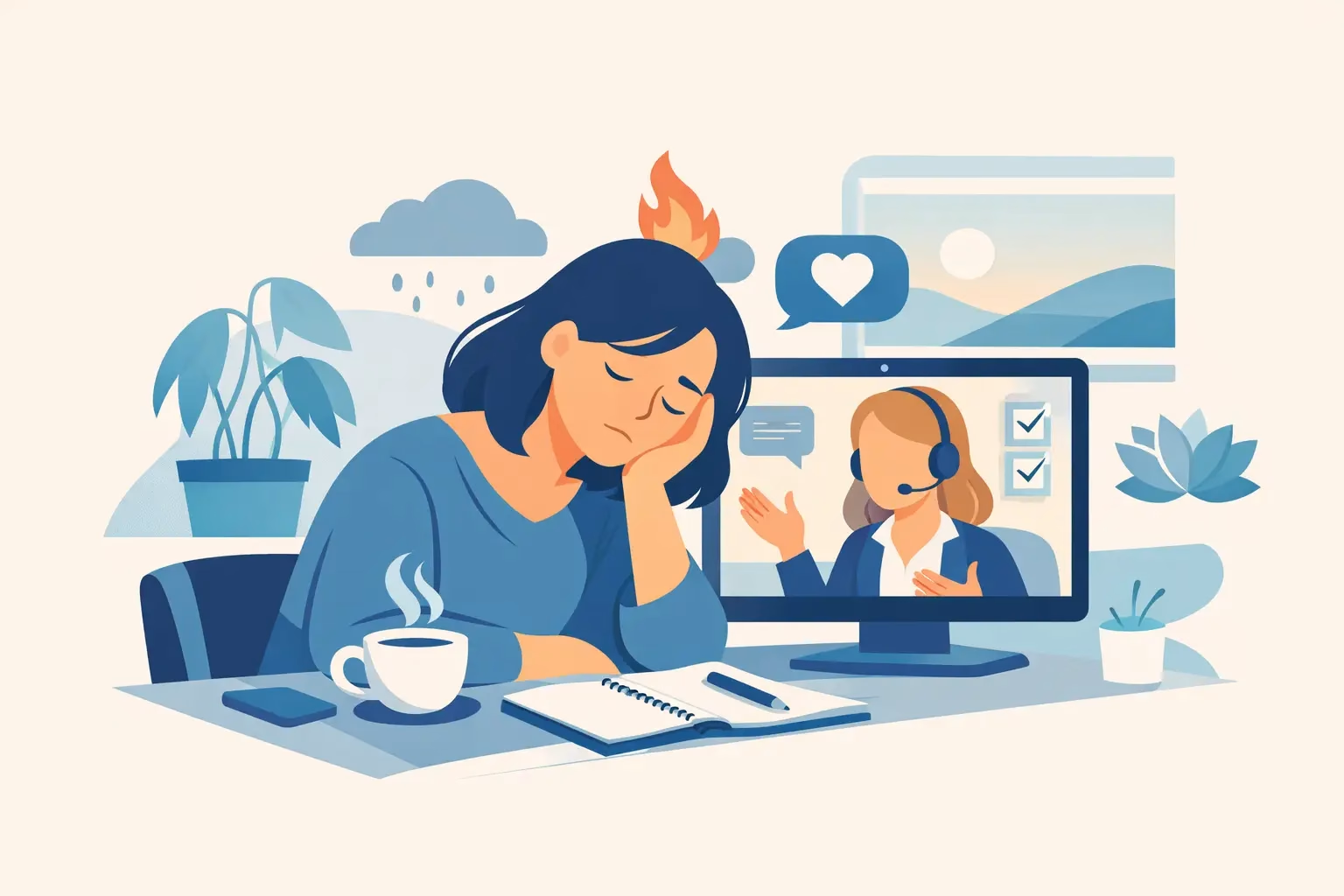
There is often an emotional cost as well. Some people become irritable or tearful. Others feel numb, cynical, or disconnected. You might notice dread on Sunday evenings, anxiety before opening your inbox, or a persistent sense that you are failing even when you are doing far too much. For some, burnout sits alongside low self-worth, trauma history, people-pleasing, or patterns of over-functioning that have been in place for years.
That matters, because burnout is not always solved by better time management. Sometimes the deeper issue is the way stress has become woven into your identity, your relationships, or your sense of safety.
Why burnout counselling online UK can be a good fit
When you are depleted, even finding support can feel like another task. Travelling to appointments, filling in long forms, or trying to explain everything perfectly from the start may be enough to put people off. Online therapy can remove some of that friction.
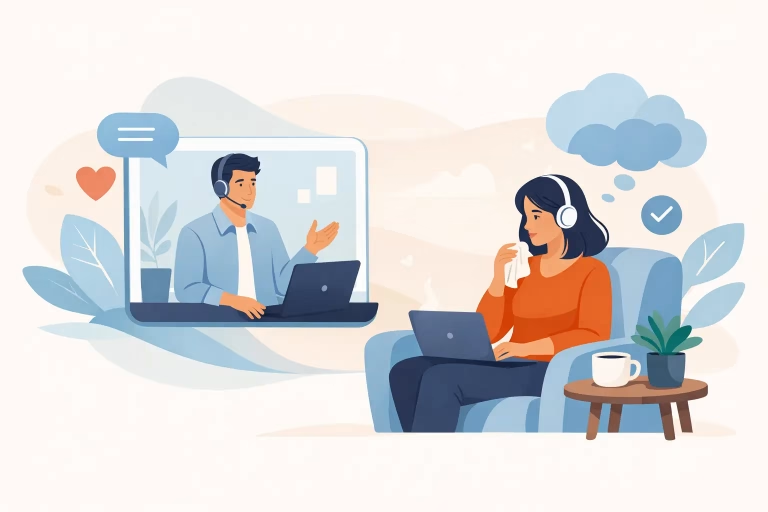
Burnout counselling online UK offers the possibility of speaking to a qualified therapist from your own home, your office, or any private space where you feel able to talk. That can make it easier to begin, especially if your energy is low or your schedule feels tight. It can also help if burnout has left you feeling exposed. Many people find it easier to open up when they are in familiar surroundings rather than an unfamiliar room.
There are practical benefits too. Online counselling can fit around work, parenting, caring, or irregular routines more easily than face-to-face therapy alone. But the real value is not only convenience. It is that support becomes more reachable at a point when reaching for anything may already feel hard.
What good therapy for burnout should make space for
Burnout is not a personal weakness, and therapy should not treat it as one. A good therapeutic space will make room for both what is happening now and what may be feeding it underneath.
At first, that may mean slowing things down enough for you to notice what your mind and body have been carrying. Many people living with burnout are so used to overriding themselves that they have stopped recognising hunger, exhaustion, resentment, grief, or fear until those feelings become overwhelming. Therapy can help you rebuild that connection gently, without judgement.
It can also help you understand your own patterns. Perhaps you say yes too quickly, feel responsible for everyone, or struggle to rest without guilt. Perhaps your work environment is genuinely unhealthy, and the issue is not that you are failing to cope but that too much is being asked of you. Sometimes it is both. Therapy is useful partly because it can hold that complexity without reducing everything to a simple fix.
Burnout counselling online UK is not just about coping tips
Practical strategies matter. Sleep, boundaries, routines, workload changes, and nervous system regulation can all help. But if counselling only offers surface-level advice, it may miss the reasons burnout keeps returning.
For one person, burnout may be tied to perfectionism and an internal critic that never lets them stop. For another, it may be linked to trauma, where staying productive has become a way to stay safe or avoid painful feelings. For someone else, the central issue may be a relationship, a workplace culture, or a long-standing sense of having to earn rest.
This is why an integrative approach can be helpful. Rather than forcing your experience into one narrow model, therapy can respond to you as a whole person. It can support immediate stabilisation while also exploring the emotional patterns, histories, and relational pressures that may be keeping you stuck.
What to expect from online counselling for burnout
If you have never had therapy before, you may worry that you will need to arrive with a clear explanation of what is wrong. You do not. Many people begin with a fairly simple truth: I cannot keep going like this.
A first session will usually focus on understanding what has brought you to therapy, how burnout is affecting your day-to-day life, and what support might feel helpful. You might speak about work, but you may also find yourself talking about relationships, grief, anxiety, family expectations, or the pressure you place on yourself. That is normal. Burnout often reaches into every part of life.
Over time, online counselling may help you feel more emotionally clear, less driven by panic or depletion, and more able to make decisions from a grounded place. That might include setting boundaries, reducing shame, noticing earlier signs of overwhelm, or working through deeper emotional pain that has been hidden beneath constant busyness.
Therapy is rarely a quick fix, and honesty matters here. If you are in severe burnout, some practical changes in your life may also need to happen. Counselling can support those changes, but it cannot make an unsustainable situation sustainable on its own. Good therapy will not pressure you to perform recovery. It will help you understand what your system is telling you and respond with more care.
Choosing the right online therapist
Qualifications and accreditation matter, especially when you are vulnerable. So does the feel of the therapeutic relationship. Burnout often leaves people feeling misunderstood, over-explained to, or treated like a problem to solve. It helps to work with someone who can be calm, experienced, and genuinely human.
You may want a therapist who understands that burnout can overlap with anxiety, trauma, addiction, low self-esteem, or relationship strain. You may also want a gentler starting point, especially if you have delayed asking for help because formal processes feel intimidating. A warm, low-pressure approach can make a real difference when your capacity is already stretched.
At The Psychological Oasis, this gentleness is part of the work itself. The aim is not to make therapy feel like another demand, but to offer a steady space where you can begin at your own pace.
When it is time to reach out
People often wait until they are completely depleted before seeking support. They tell themselves they should cope, that other people have it worse, or that they will sort it out after one more deadline, one more difficult week, one more push. Burnout tends to deepen in that kind of silence.
You do not need to wait until things fall apart. If you are exhausted all the time, emotionally detached, increasingly anxious, or no longer feeling like yourself, that is enough reason to talk to someone. The same is true if you are still functioning on paper but doing so at a real personal cost.
Online counselling can offer a private, steady place to pause and be honest about what is happening. Not perform. Not explain it away. Just pause long enough to be met with care and clarity.
If burnout has narrowed your world, support can help you begin widening it again. Not all at once, and not by forcing yourself back into productivity, but by listening more closely to what you need and allowing that to matter.