Anxiety Counselling Can Help You Feel Steadier
There are moments when anxiety does not feel like a passing worry. It can be the knot in your stomach before you open an email, the racing thoughts that arrive at night, or the sense that you are always waiting for something to go wrong. Anxiety counselling offers a private, compassionate space to slow down and understand what may be happening beneath that constant pressure.
You do not need to have the right words, a diagnosis, or a clear explanation before seeking support. Many people begin therapy simply because they are tired of coping alone. That is enough.
When anxiety begins to shape everyday life
Anxiety can be loud, but it is not always obvious. For some people, it shows up as panic, physical tension, or an inability to switch off. For others, it appears as overthinking every decision, avoiding situations that once felt manageable, people-pleasing, irritability, or a persistent feeling of being behind.
You may still be going to work, caring for others, answering messages and appearing capable. Yet internally, everything can feel effortful. This is one reason anxiety is so often missed by the people around us. You might even minimise it yourself because you are functioning, even though functioning has become exhausting.
Anxiety can also be connected to experiences that do not immediately look like anxiety. Burnout, grief, difficult relationships, low self-worth, trauma, addiction, major life changes and emotional disconnection can all leave the nervous system feeling watchful and overwhelmed. Sometimes there is a clear trigger. Sometimes there is not. Both experiences deserve care.
How anxiety counselling can help
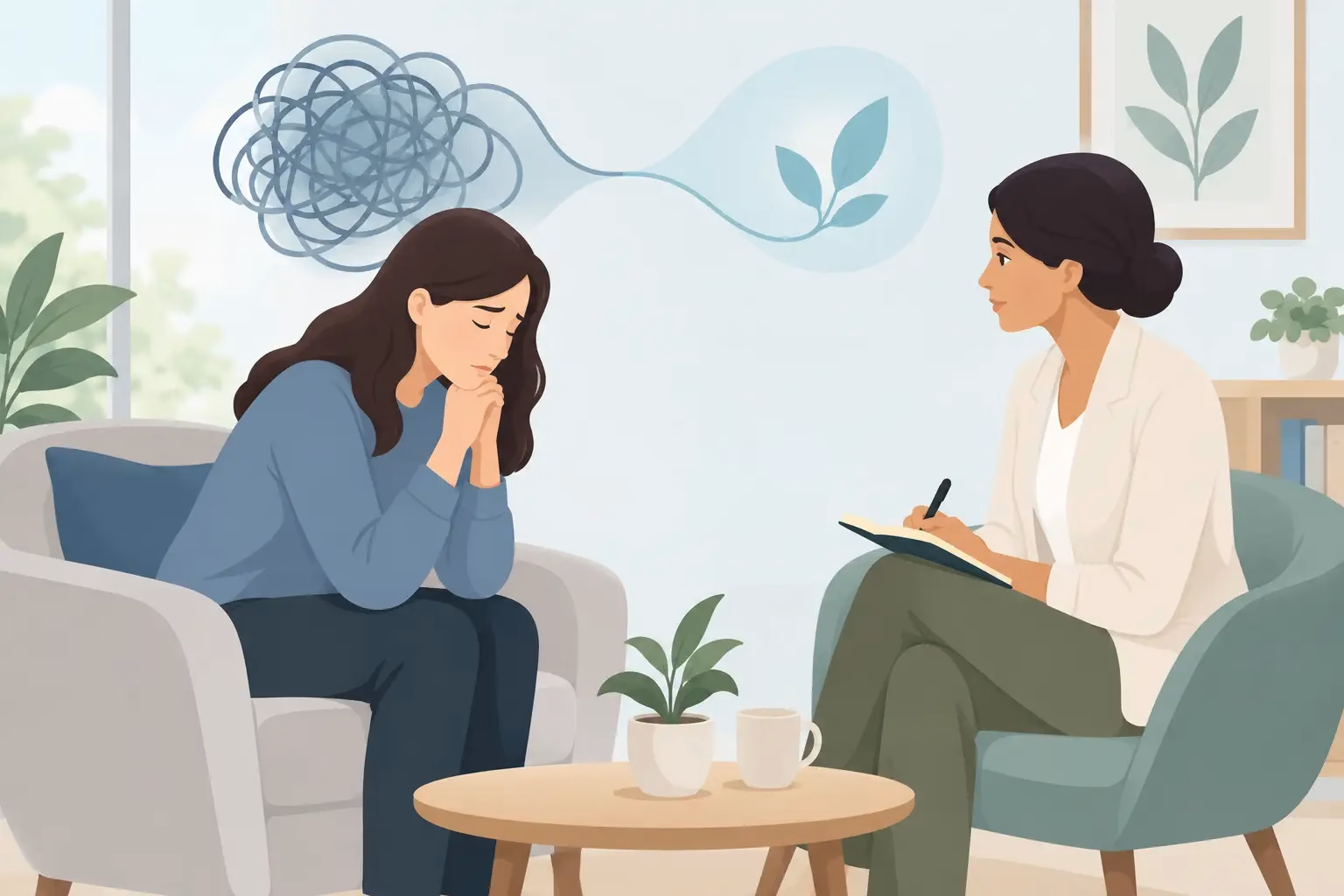
Counselling is not about being told to think positively or simply “calm down”. It is a conversation that makes room for your experience without judgement. Together with a therapist, you can begin to notice the patterns that keep anxiety going and explore ways of responding to yourself with more understanding.
The aim is not necessarily to remove every anxious feeling from your life. Anxiety is, after all, a human response to uncertainty, threat and change. The work is often about helping it take up less space, so it no longer gets to make every decision for you.
A place where you do not have to perform
For many people, one of the most relieving parts of therapy is being able to stop pretending they are fine. You do not need to present a polished version of yourself or make your story sound coherent. You can arrive uncertain, emotional, quiet, frustrated or numb.
A gentle therapeutic relationship can make it safer to speak about thoughts or feelings you have been carrying privately. That may include fears that feel irrational, shame about how you are coping, or worries about disappointing the people you love. Being met with patience can, over time, soften the isolation anxiety creates.
Understanding the pattern, not just the symptom
Anxiety often has a logic, even when it feels confusing. Perhaps you learned early on that you had to stay alert to avoid conflict. Perhaps you feel responsible for everyone else’s comfort. Perhaps a difficult experience has left your body reacting as though danger is still close.
An integrative counsellor and psychotherapist may draw on different therapeutic approaches depending on what you need. This could involve exploring past experiences and relationships, noticing the connection between thoughts, emotions and physical sensations, or finding practical ways to manage overwhelming moments. There is no single method that suits everyone, and therapy can be adjusted at your own pace.
Building a kinder response to difficult moments
It can be helpful to develop small, realistic ways of responding when anxiety rises. These might include recognising early signs of overwhelm, creating more space between a thought and a reaction, setting a boundary, or using grounding techniques when your body feels activated.
These tools are not a test of whether you are “doing therapy properly”. Some days they may help a great deal; on others, anxiety may still feel strong. Counselling makes room for that reality. Progress is rarely a straight line, particularly when anxiety has been part of life for a long time.
What happens in the first sessions?
Starting therapy can feel daunting, especially if you have spent years keeping difficult feelings contained. You may worry that you will be asked to share too much too quickly, or that you will not know what to say.
A good first conversation should not feel like an interrogation. It is an opportunity to talk about what has brought you to counselling, what you would like to feel different, and any concerns you have about the process. You can also get a sense of whether the therapist feels like someone you could work with. The relationship matters, and it is reasonable to take that seriously.
There may be times when you want practical support with a current problem, such as work stress, panic symptoms or a relationship difficulty. At other times, it may feel more useful to explore longer-standing patterns. Neither approach is better in every situation. The right focus depends on what feels most pressing and what you have capacity for.
At The Psychological Oasis, the first step is intended to feel human rather than overly formal. You do not need to navigate lengthy, impersonal processes before you can begin a conversation about how you are feeling.
Is online counselling right for anxiety?
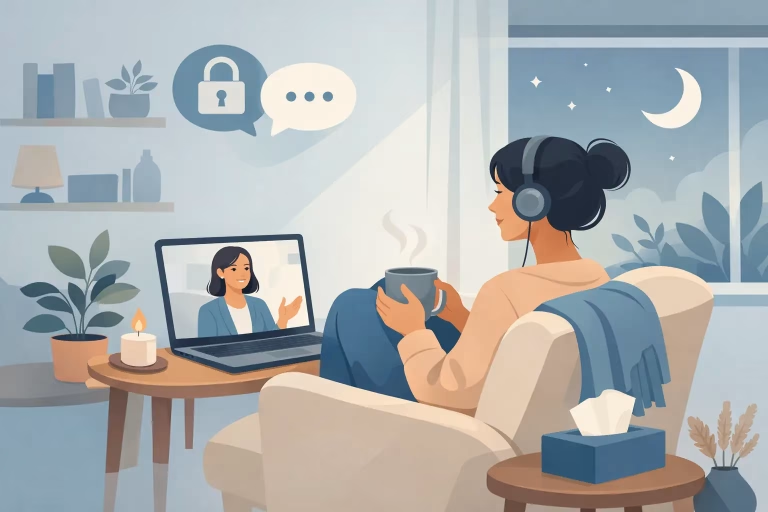
Online counselling can make support more accessible when leaving home feels difficult, your schedule is full, or you simply feel more comfortable speaking from a familiar space. It allows adults across the UK, and those seeking English-language therapy internationally, to access confidential sessions without the journey to an appointment.
For some people, being at home helps them feel safer and more able to open up. For others, a private room away from home may feel more containing. It is worth thinking about where you can speak without being interrupted and whether you have a reliable internet connection. These practical details can make a meaningful difference to how settled you feel.
Online therapy is not lesser therapy. What matters most is the quality of the relationship, the privacy of the setting and whether the approach feels right for you. Limited face-to-face sessions may also be possible in some circumstances near Harley Street in London.
When anxiety needs urgent support
Counselling can be valuable, but there are times when more immediate help is needed. If anxiety is accompanied by thoughts of harming yourself or someone else, if you feel unable to keep yourself safe, or if you are in immediate danger, contact emergency services on 999 or attend A&E. In the UK, you can also contact NHS 111 for urgent mental health advice, or Samaritans on 116 123 for emotional support.
You do not have to decide whether your distress is “serious enough” before reaching out. If you are struggling to stay safe, it is appropriate to seek urgent support.
Finding a counsellor you can trust
It is understandable to feel cautious when choosing a therapist. You are considering sharing parts of yourself that may have felt difficult to share elsewhere. Qualifications and professional registration matter, but so do warmth, clarity and the sense that you will not be rushed or judged.
You might ask yourself whether the counsellor works with the concerns you are facing, whether their approach makes sense to you, and whether practical matters such as online sessions, availability and fees feel manageable. It is also reasonable to ask about concessionary rates if cost is a concern. Therapy needs to be emotionally sustainable, but it also needs to fit into your life.
The first step does not need to be a commitment to have everything figured out. It can simply be a quiet acknowledgement that you deserve support. Anxiety may be telling you that you have to handle this perfectly and alone. You do not. A gentle conversation, begun when you are ready, can be a meaningful place to start.