
A Private Online Therapy Guide for Starting Gently
You may have opened a therapy website, read a little, then closed the page again. Perhaps you are unsure what you would say, worried about being judged, or simply too tired to explain everything from the beginning. This private online therapy guide is for that moment: a quiet place to understand what private therapy can offer before you decide whether to take the next step.
Online therapy does not ask you to have the right words or a neat account of what is wrong. You can begin with anxiety, exhaustion, a relationship that feels painful, a pattern you cannot seem to shift, or a simple sense that life has become difficult to carry alone. The first conversation can be a place to slow down and work out what you need, at your own pace.
What private online therapy can feel like
Private online therapy is counselling or psychotherapy arranged directly with an independent therapist, rather than through your GP, employer, insurer or a large therapy platform. Sessions usually take place by secure video call, often from your own home, at an agreed weekly time.
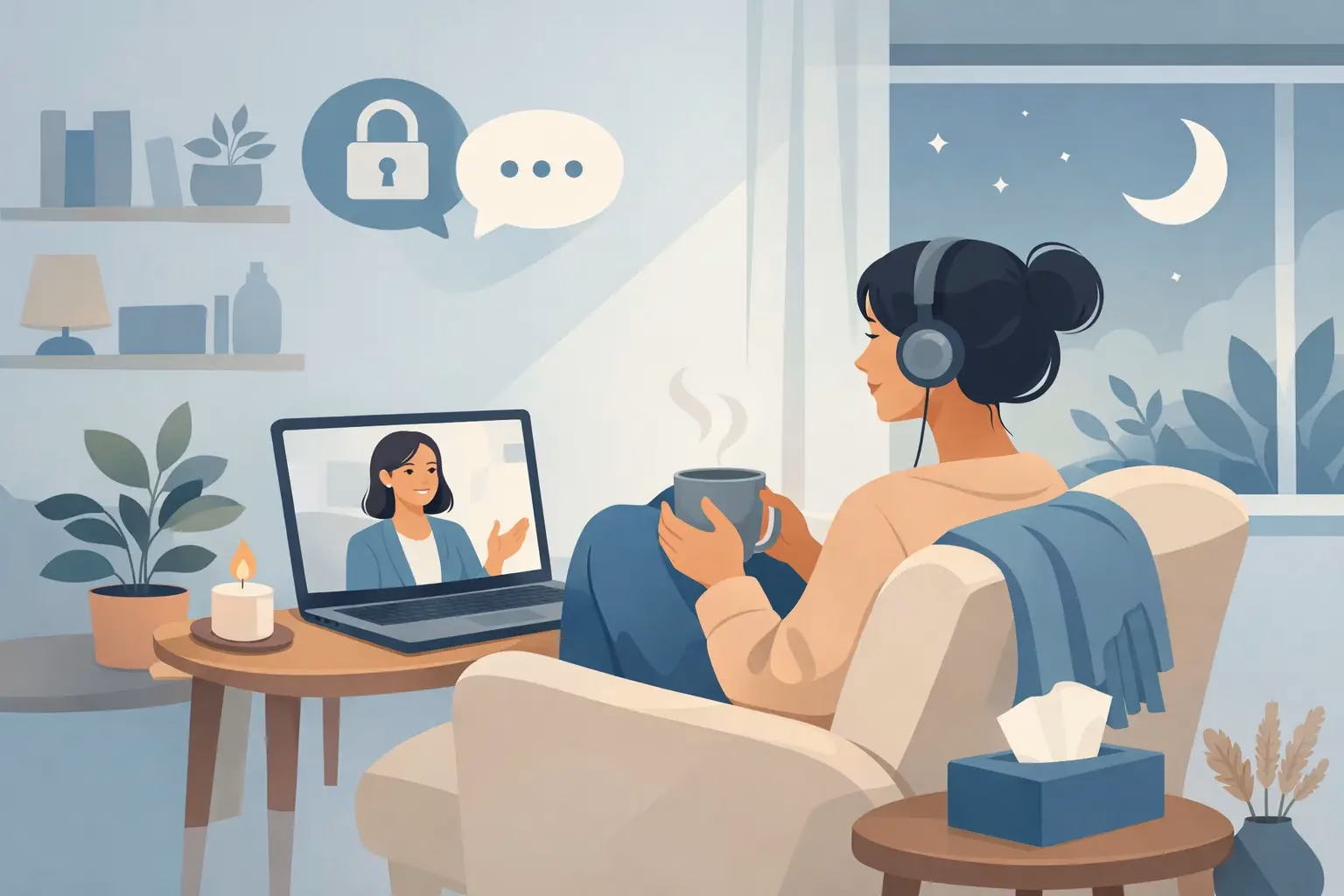
For many people, the greatest benefit is not just convenience. Being in a familiar room can make it easier to speak honestly. You might make a cup of tea beforehand, sit with a blanket, or take a few quiet minutes after the session rather than immediately travelling back into a busy day. This can be particularly helpful when you are living with overwhelm, low self-worth, trauma, burnout or emotional disconnection.
That said, online therapy is not automatically right for every situation. Some people feel more comfortable meeting face to face, while others do not have a private space at home. A good therapist will discuss this openly rather than treating video sessions as a one-size-fits-all answer. Privacy, comfort and the quality of the therapeutic relationship matter more than forcing a particular format.
A private online therapy guide to confidentiality
It is natural to wonder who will know you are in therapy and what happens to the things you share. In private practice, your sessions are confidential. A therapist should explain how they keep records, where information is stored, what video platform is used, and how they protect your personal data.
Confidentiality has important limits, which should be discussed clearly before therapy begins. A therapist may need to take action if they believe there is a serious and immediate risk of harm to you or someone else, or where there is a legal duty to disclose information. These situations are not the ordinary course of therapy. The purpose of explaining them is not to alarm you, but to make sure the relationship begins with honesty and clarity.
Your own surroundings matter too. If possible, choose a room where you can close the door and will not be overheard. Headphones can help if other people are nearby. You do not need a perfect home office, but you do deserve enough privacy to speak without monitoring every word. If this is difficult, tell your therapist. Together, you may be able to find a practical arrangement that feels safer.
Choosing a therapist you can trust
Qualifications and professional registration are a sensible starting point, but they are not the whole story. In the UK, you may wish to look for a therapist who is registered with a recognised professional body, such as the British Association for Counselling and Psychotherapy (BACP), and who works within an ethical framework. This offers reassurance about training, supervision, professional standards and a process for raising concerns if needed.
The approach a therapist takes also matters. Some work in a focused, structured way around a particular difficulty. Others work integratively, drawing on different therapeutic ideas to respond to the person in front of them. An integrative approach can be useful when life does not fit into one category – perhaps anxiety is tied to childhood experiences, relationship patterns, work pressure and a harsh inner critic all at once.
Yet the question beneath the credentials is often simpler: do you feel you could be yourself with this person? You may not know after one email or one session, but notice whether you feel listened to rather than assessed. Does the therapist explain things plainly? Are they respectful of your boundaries? Do you leave with a sense that there might be room for your experience, even if it is still painful?
Therapy should not feel like a performance. You are not there to prove that you are struggling enough, nor to give the most coherent version of your life. The right therapeutic relationship makes it safer to be uncertain, ashamed, angry, grieving or simply unable to find the words.
What happens when you make contact
Some services begin with extensive forms and formal assessments. These can be appropriate in certain settings, particularly where there are complex clinical or safeguarding needs. But for someone who already feels overwhelmed, a long intake process can become another barrier.
A gentler private practice may begin with a short message or initial conversation. You can ask about availability, fees, online arrangements and whether the therapist has experience of the concerns you are bringing. You do not have to tell your full story at this stage. A few sentences are enough: for example, that you have been feeling anxious for a long time, that your relationship is under strain, or that you are finding it hard to cope after a difficult experience.
At The Psychological Oasis, the aim is to make that first point of contact feel human rather than procedural. There is space to ask questions before committing to regular sessions, without pressure to disclose more than feels manageable.
If you choose to begin, the first session is usually about getting a sense of one another and understanding what has brought you to therapy. Your therapist may ask about your current circumstances, what support you have, and what you hope might change. They may also explain practical matters such as session length, payment, cancellations and confidentiality. You are allowed to ask questions too.
Preparing for your first online session
There is no special way to prepare for therapy. Arriving exactly as you are is enough. Still, a little practical planning can make the experience less stressful. Check that your device is charged, your internet connection is reasonably reliable, and you have water nearby. If possible, allow ten minutes before and after the call so you are not rushing from a meeting or straight into caring responsibilities.
You might jot down a few things that have been on your mind, but do not turn this into homework. Sometimes the most useful opening is, “I do not know where to start.” A thoughtful therapist will understand that starting can be the hardest part.
It can also help to consider what you will need afterwards. Therapy may bring relief, but it can sometimes stir up feelings that have been held down for a long time. Plan something gentle if you can: a walk, a shower, quiet music, or time away from demanding conversations. This is not indulgence. It is a way of giving yourself space to process.
Fees, frequency and the question of commitment
Private therapy involves a financial decision, and it is reasonable to ask about fees early. Many therapists charge per session, while some offer concessions for people on lower incomes, students or those in difficult circumstances. Lower-cost sessions may be limited, so it is worth asking directly rather than assuming you will not be eligible.
Weekly sessions are common because they create continuity and allow trust to build. However, what is suitable depends on your needs, finances and capacity. Some people begin weekly during a particularly difficult period and later move to fortnightly sessions. Others need a more time-limited piece of work around a specific issue. A collaborative therapist will be able to talk with you about this openly.
You do not need to promise months of therapy before you have experienced a session. At the same time, meaningful change is rarely instant. Therapy often involves returning to familiar feelings with more support, curiosity and compassion than you had before. It can be challenging, but it should not feel coercive. You remain part of every decision about the work.
When online therapy may need extra support
Private online therapy can be a valuable source of ongoing support, but it is not an emergency service. If you are at immediate risk of harming yourself or someone else, or feel unable to keep yourself safe, contact emergency services, go to A&E, or seek urgent local crisis support. If you are outside the UK, use the emergency and crisis services available where you are.
You can also tell a therapist if you are having thoughts of suicide, struggling with addiction, or feeling unsafe. These are not subjects that make you “too much” for therapy. They do, however, sometimes require a clear safety plan and support from local health services alongside counselling. Good care means being honest about what one therapist can provide and when wider help is needed.
Starting therapy is not a declaration that you have failed to cope. It can be a small, steady act of taking your inner life seriously. You do not have to have everything figured out before you reach out. A calm conversation, with someone who meets you with care, can be enough to begin.