
Is Counselling Confidential Online? What to Know
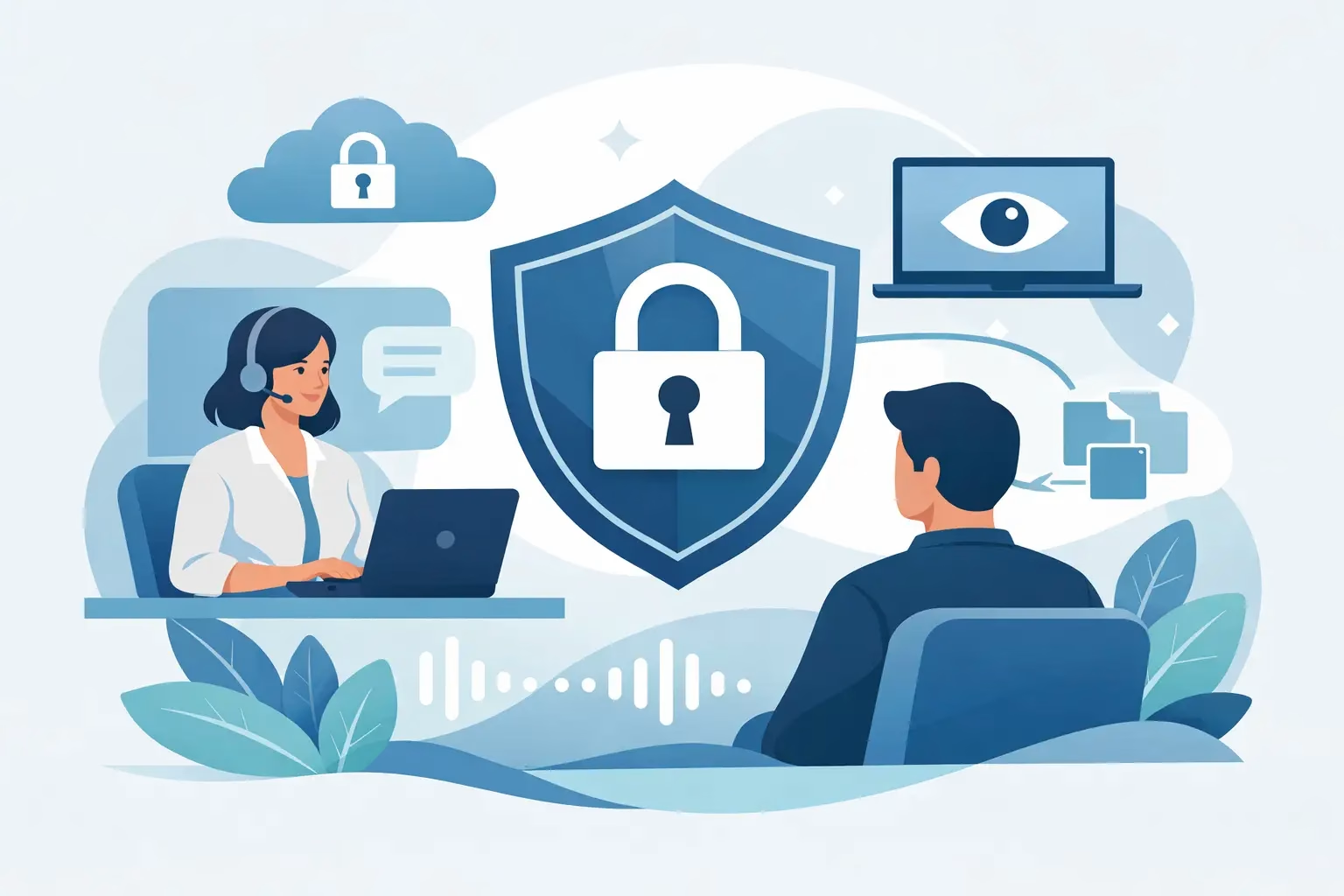
A great deal can sit behind a first message to a counsellor. You may be carrying something you have not told anyone, or wondering whether it is safe to speak freely from your own home. So, is counselling confidential online? In most circumstances, yes. Online counselling is built around the same commitment to confidentiality as therapy in a room together, with a few practical considerations to understand before you begin.
Confidentiality is not simply a technical promise. It is part of what makes therapy possible. Knowing that you can talk without fear of judgement, gossip or unnecessary exposure can make it easier to bring the parts of your experience that feel painful, confusing or shameful into the open.
Is counselling confidential online in the UK?
A qualified counsellor or psychotherapist has a professional and ethical responsibility to protect your privacy. This applies whether sessions happen online, by telephone or face to face. What you share in therapy is treated as private, and your therapist should not discuss it with your partner, family, employer, GP or anyone else without your permission.
For a BACP-registered therapist, confidentiality is guided by the BACP Ethical Framework, alongside relevant UK data protection law. Your therapist should explain how they hold notes, use your contact details and manage online sessions. You should have the chance to ask questions before you decide whether therapy feels right for you.
That said, confidentiality is not an absolute secret in every possible circumstance. An ethical therapist will be clear about its limits rather than leaving you to discover them at a difficult moment. This clarity is not there to alarm you. It is there to help create a relationship based on trust and informed choice.
When might confidentiality have limits?
There are rare situations where a therapist may need to share information without your consent. This would normally happen only where there is a serious and immediate concern about your safety or someone else’s safety, or where the law requires disclosure. For example, this could involve a significant risk of serious harm, a safeguarding concern involving a child or vulnerable adult, or information connected to serious crime.
Even then, a therapist would aim to speak with you first wherever it is safe and possible to do so. The intention is not to take control away from you. It is to respond carefully to situations in which keeping information entirely private could lead to serious harm.
Therapists also use clinical supervision. This is a confidential professional space where they reflect on their work with an experienced supervisor to make sure they are supporting clients responsibly. Your identity is protected as far as possible, and the purpose is always to improve the care you receive, not to share your personal story casually.
If you are worried about a particular situation, such as addiction, thoughts of self-harm, trauma, immigration concerns or relationship difficulties, you can ask directly: “What would you need to share, and when?” A good therapist will answer plainly and sensitively.
What makes online counselling private?
The core principles of confidentiality remain the same online, but privacy is shared between therapist and client in a more practical way. Your therapist has a responsibility to use an appropriate, secure method for sessions and to work from a private space where others cannot overhear. They should take care with records, passwords, devices and any communication sent outside the session.
At the same time, your home may not always offer the privacy of a therapy room. Perhaps you live with family, share a flat, have children nearby, or worry that someone may hear you through a wall. These concerns are common, and they do not mean online counselling cannot work for you. They simply deserve some thought before your first appointment.
You might choose to sit in a parked car, use headphones, play quiet music outside the room or arrange a time when others are out. If speaking aloud feels impossible, tell your therapist. Together, you may be able to find a safer time, a different format, or a way to begin with less pressure.
It is also wise to avoid using a work laptop or work email address for therapy where possible. Employers may have access to workplace systems, even when messages feel personal. A private device, a personal email address and a secure internet connection usually offer greater peace of mind.
The difference between privacy and secrecy
Some people come to counselling because they have become used to hiding how they feel. They may have learnt to stay quiet to avoid conflict, judgement or disappointment. In that context, asking about confidentiality is not merely an administrative question. It can be a way of testing whether there is finally room to be honest.
Therapy should not pressure you to disclose everything straight away. Confidentiality creates a protected setting, but trust develops gradually. You are allowed to take your time, to say that something feels difficult to discuss, or to begin with what is most manageable today.
A therapist may encourage gentle exploration, but you remain in charge of what you share and when. This matters particularly if you have experienced trauma, controlling relationships or situations where your boundaries have not been respected. Feeling safe enough to speak is often part of the work itself.
Questions worth asking before online therapy
Before you start, it can help to ask how sessions are delivered, whether the platform is designed for confidential conversations, and how notes are stored. You might also ask what happens if the connection fails mid-session, whether sessions are recorded, and how you can contact the therapist between appointments.
In most therapeutic settings, sessions are not recorded unless this has been explicitly discussed and agreed with you. You should also avoid recording a session yourself without first talking it through. A recording can change how safe the space feels, and it may create risks if a device is lost, shared or accessed by someone else.
You may want to know whether your therapist can work with clients who are outside the UK. This can depend on professional insurance, data protection arrangements and the laws that apply where you are located. It is always better to raise this early, particularly if you travel frequently or live abroad.
The answers do not need to be full of complicated technical language. What matters is that you feel informed, respected and able to make a decision without being rushed. If a therapist is vague or dismissive about confidentiality, it is reasonable to look elsewhere.
If your privacy is difficult at home
For some people, privacy is not simply inconvenient. It may be genuinely hard to find, especially when living with a controlling partner, caring responsibilities, shared housing or an unpredictable household. If this is your situation, you do not have to solve it alone before reaching out.
You can make initial contact in a way that feels safest and explain only as much as you want to. A therapist can talk with you about practical options and whether online counselling is suitable at this point. Sometimes a short telephone conversation, a carefully chosen session time or a different location can make a meaningful difference.
There may also be times when face-to-face support, specialist domestic abuse services, or urgent help is more appropriate. Online therapy is flexible, but it cannot remove every risk in a person’s environment. Honest conversation about those limits is part of caring well.
A confidential space can begin gently
At The Psychological Oasis, online counselling is approached as a human conversation first, not a test you have to pass or a lengthy process you need to get exactly right. Questions about privacy, confidentiality and the practicalities of meeting online are welcome from the outset.
You do not need to arrive with a polished explanation of what is wrong. You can start by saying that you feel overwhelmed, unsure, exhausted or simply tired of holding everything on your own. With the right boundaries and a private enough space, online counselling can offer a calm place to speak at your own pace.