
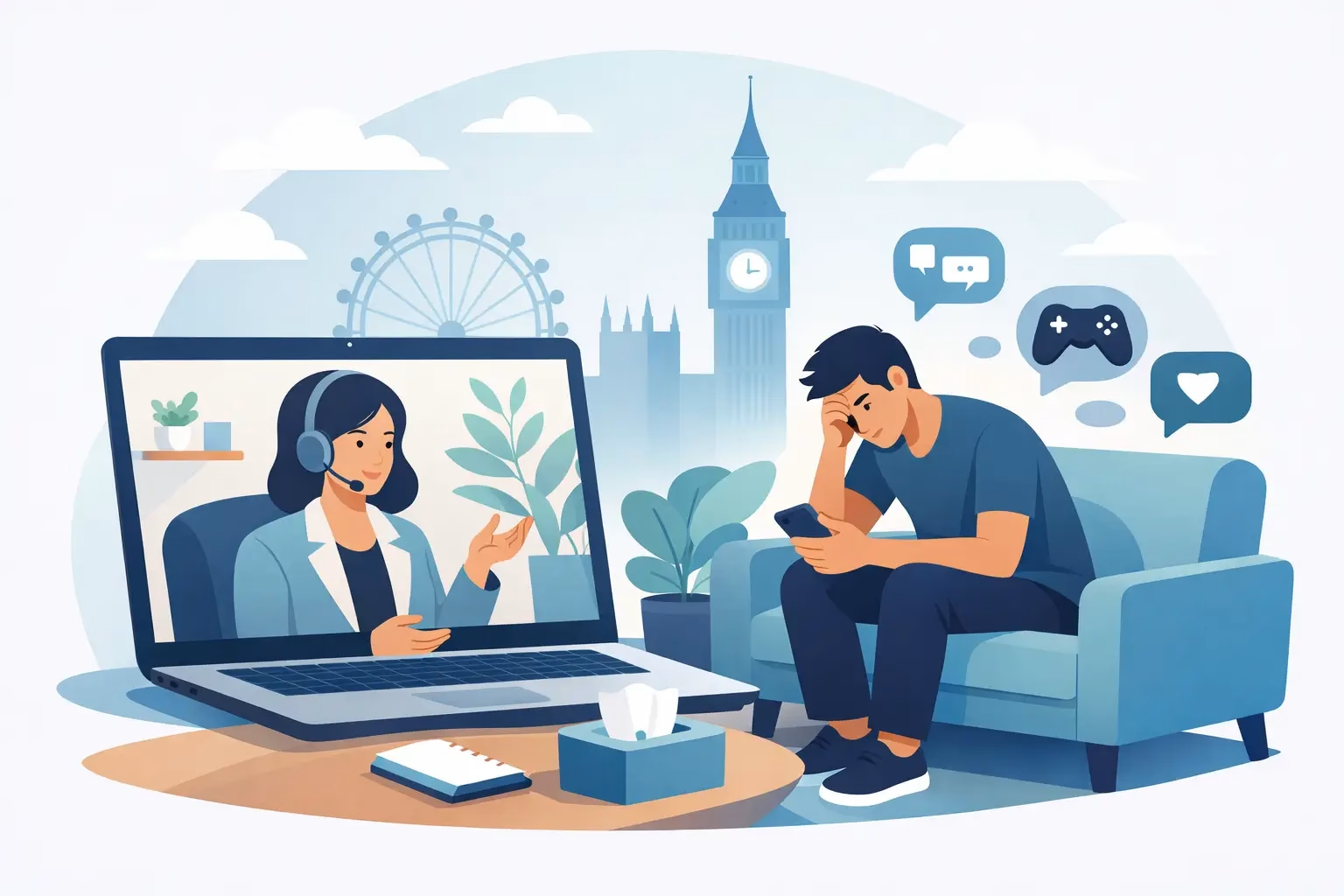
Online Addiction Counselling UK
Some people wait until things look serious from the outside before they reach for help. More often, the struggle starts quietly – hiding bottles, losing hours online, relying on something to take the edge off, then wondering when it stopped feeling like a choice. Online addiction counselling UK can offer a calmer way to begin, especially if shame, anxiety or sheer exhaustion have made it hard to speak to anyone face-to-face.
Addiction is rarely just about the substance, behaviour or habit itself. It often sits alongside overwhelm, loneliness, trauma, stress, grief, relationship pain, or a long history of feeling that you have to cope alone. When that is the case, being told simply to stop can feel missing, even cruel. Real support usually begins by understanding what the addiction has been doing for you, even if it is also causing harm.
What online addiction counselling UK can help with
Online addiction counselling is not only for people in crisis, and it is not reserved for one type of addiction. Some clients seek support for alcohol or drug use. Others are struggling with gambling, pornography, compulsive sexual behaviour, gaming, shopping, food-related patterns, or a broader sense of dependency that is affecting work, relationships and self-respect.
Sometimes the issue is frequency. Sometimes it is secrecy. Sometimes it is the feeling that you keep making promises to yourself and breaking them. You might still be functioning well enough on paper, yet privately feel frightened by how much space this pattern has started to take up in your mind.
Therapy can help you slow that down and look at it with honesty, without piling on more shame. That matters because shame tends to make addiction more entrenched, not less. If every setback becomes evidence that you are weak or beyond help, the cycle usually tightens.
Why people choose online support
For many adults, online counselling feels more manageable than walking into a clinic or waiting room. If you are already carrying embarrassment, fear of judgement, or worry about being recognised, the privacy of home can make the first conversation possible.
There is also the practical side. Online sessions remove travel time, fit more easily around work or caring responsibilities, and allow access to support wherever you are in the UK. If your energy is low or your life feels chaotic, reducing those barriers is not a small thing. It can be the difference between putting help off for another six months and actually starting.
That said, online therapy is not automatically right for everyone. Some people find it easier to connect in person. Others need more intensive or specialist support than private weekly counselling can provide on its own. A good therapist will not force a one-size-fits-all answer. They will help you think carefully about what level of support feels safe and realistic.
Addiction is often a response, not a moral failure
This is one of the most important shifts counselling can offer. Addiction can involve denial, self-deception and damaging choices, but that does not make you a bad person. In many cases, the addictive pattern began as an attempt to regulate something unbearable – panic, emptiness, intrusive memories, social fear, self-criticism, or emotional numbness.
If that coping strategy has been with you for years, letting go of it may feel exposing. Part of you may want change, while another part is terrified of what will surface without it. That ambivalence is common. It does not mean therapy is failing. It usually means something significant is being approached with care.
A gentle, experienced counsellor will make room for that mixed feeling rather than treating it as resistance to be pushed through. Change tends to be more stable when you are not being bullied into it, including by your own inner voice.
What happens in online addiction counselling
The first sessions are often less dramatic than people expect. You do not need to arrive with the right language, a full history, or a polished explanation of what is wrong. It is enough to begin with what has been happening and what feels difficult right now.
From there, therapy may look at the pattern itself – when it happens, what triggers it, what relief it gives, and what it costs. It may also begin to explore the emotional context around it. That could include trauma, family dynamics, burnout, attachment wounds, grief, stress, or a painful sense of not being enough.
This deeper work matters because symptom control alone may not hold if the underlying pain remains untouched. At the same time, insight without practical support can leave people feeling exposed. Good addiction counselling often needs both. You may spend time building steadier routines, noticing relapse patterns, strengthening boundaries, and finding safer ways to regulate emotion, while also making sense of the roots of the struggle.
Some weeks will feel clearer than others. Progress is rarely linear. There may be slips, avoidance, honesty followed by retreat, and moments when you feel tempted to cancel because talking about it has made things feel more real. Therapy can hold that, too.
Choosing the right online addiction counsellor in the UK
Credentials matter, but so does the quality of the relationship. You are not simply choosing a service. You are choosing a person to trust with parts of your life that may carry a great deal of secrecy and pain.
It helps to look for a counsellor or psychotherapist who is properly accredited or registered, clear about confidentiality, experienced in addiction work, and able to work in a way that feels human rather than mechanical. For many people, a rigid or overly clinical process can make it harder to speak openly, especially in the beginning.
You may also want to consider approach. Some therapists are highly structured and goal-focused. Others work more relationally and integratively, adapting to the person in front of them rather than forcing everything into a fixed model. Neither is universally better. It depends on what helps you feel safe enough to be honest.
If you have experienced trauma, emotional neglect, or controlling relationships, that sense of safety is especially important. A therapist who moves too quickly, gives blunt advice, or mistakes fear for non-compliance may not be the right fit. You deserve support that is steady and respectful.
At The Psychological Oasis, that gentler entry point matters. The aim is not to make therapy feel like another system you must get through correctly, but a place where you can arrive as you are and begin at your own pace.
What online counselling can and cannot do
It is worth being honest here. Counselling can be deeply helpful, but it is not magic, and it is not a substitute for every form of care. If someone is in immediate danger, experiencing severe withdrawal risk, or needs medical detox, emergency or specialist addiction services may be more appropriate as a first step.
Private online therapy can, however, offer something many people have been missing for a long time – consistent, compassionate space to understand themselves, reduce secrecy, and build change that is psychologically sustainable rather than based on fear. It can support harm reduction as well as abstinence-focused goals, depending on the person, the risk level, and what is clinically appropriate.
That flexibility matters. Not everyone arrives ready to stop completely. Some people need first to understand the pattern, stabilise their life, and rebuild enough self-trust to imagine change. Therapy can still begin there.
Starting before everything falls apart
One of the quieter myths around addiction is that you have to wait until it gets worse before help is justified. You do not. You are allowed to seek support because something feels off, because you are tired of hiding, because your relationship with alcohol, drugs or a behaviour is taking more from you than you want to admit.
You do not have to prove that you are struggling enough. And you do not have to present your pain in a dramatic way for it to count.
If you are considering online addiction counselling UK, it may be enough to start with a simple question: what am I using this for, and what is it costing me now? You do not need the whole answer before reaching out. Sometimes relief begins with being met kindly, and with the sense that change does not have to start through force – it can start through honesty, patience and support.