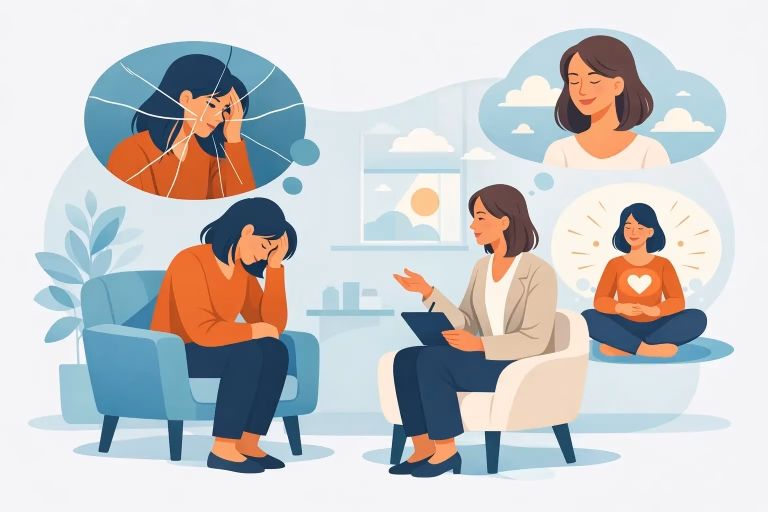

How Integrative Counselling Works Online
You may be holding everything together on the outside while feeling exhausted, disconnected or overwhelmed underneath. Perhaps you have thought about therapy for a long time, but the idea of explaining yourself to a stranger, filling in pages of forms or travelling to an appointment has felt like too much. Understanding how integrative counselling works online can make that first step feel less uncertain.
Online integrative counselling offers a private, supportive space to talk from where you are. It is not a lesser version of face-to-face therapy. For many people, being in their own familiar surroundings makes it easier to begin, speak openly and return to difficult experiences at a pace that feels manageable.
What does integrative counselling mean?
Integrative counselling is based on a simple idea: one approach does not suit every person, every difficulty or every stage of life. Rather than following a rigid formula, an integrative counsellor draws thoughtfully on different therapeutic approaches to meet the person in front of them.
This may include giving careful attention to your present feelings and relationships, exploring patterns that began earlier in life, noticing how your thoughts affect your mood, or finding practical ways to manage anxiety and emotional overwhelm. The aim is not to give you a label or tell you how to live. It is to understand your experience more fully, together.
At the heart of the work is the therapeutic relationship. You deserve to feel heard without being judged, rushed or pushed to share more than you are ready for. Techniques can be helpful, but lasting change often begins when someone has a reliable space in which their feelings make sense.
An integrative approach can be particularly helpful when life does not fit neatly into one category. Burnout can involve work pressure, perfectionism, old family expectations and a nervous system that has been on alert for too long. Relationship difficulties may bring up attachment wounds, low self-worth, grief or fear of being alone. Therapy can hold those strands without reducing you to a single problem.
How integrative counselling works online in practice
Most online sessions take place through a secure video platform, at an agreed time, with you and your counsellor speaking face to face on screen. Sessions are usually held weekly, although the right rhythm depends on your circumstances, availability and what feels sustainable.
Before counselling begins, there is normally an initial conversation. This is an opportunity to ask questions, describe what has brought you to therapy and get a sense of whether the counsellor feels like a good fit. At The Psychological Oasis, this first contact is kept gentle and human. You do not need to arrive with a polished account of your life, or know exactly what you need to say.
In the early sessions, you might talk about what feels most pressing: panic that arrives without warning, drinking that has become difficult to control, the impact of a relationship ending, a lingering sense of emptiness, or simply the feeling that you cannot keep going as you are. Your counsellor will listen for both the immediate strain and the wider context around it.
From there, the work develops collaboratively. Some sessions may focus on making space for feelings you have had to suppress. Others may involve gently exploring recurring patterns, such as always looking after others while neglecting yourself, withdrawing when closeness feels risky, or becoming harshly self-critical after a mistake. At times, you may also agree on small practical steps between sessions, but counselling is not a test you can pass or fail.
The online setting is part of the therapy
Online therapy asks for a little preparation, but it can also offer meaningful comfort. You might join from a quiet room at home, a private office or another place where you can speak without being overheard. Headphones, a charged device and a stable internet connection can help protect privacy and reduce distractions.
It is worth thinking about what you need after a session, too. If you have discussed something painful, you may want ten minutes before a meeting, the school run or household responsibilities. A cup of tea, a short walk, a shower or simply sitting quietly can create a useful transition back into your day.
Some people worry that a screen will feel distant. That can happen, particularly at first, and it is something that can be talked about openly. Many clients find that regular eye contact, a consistent time and the privacy of their own space allow trust to grow naturally. What matters most is not the format alone, but whether you feel safe enough to be honest.
What a session may feel like
There is no expectation that every session will bring a major insight. Sometimes therapy feels relieving because you have finally said something aloud. Sometimes it feels tender, confusing or tiring because you are beginning to notice what you have long had to avoid. These responses are not signs that you are doing it wrong.
A good integrative counsellor pays attention to your capacity as well as your story. If trauma, loss or addiction-related experiences are part of what you are carrying, the work should not force you into detailed memories before there is enough safety and stability. You can slow down, pause, ask for clarification or say that a question does not feel right. Your pace matters.
There may also be moments of quiet, laughter or ordinary conversation. Therapy is not always intensely serious. The parts of you that are resilient, hopeful, creative and capable deserve attention alongside the pain.
There is no single timetable for change
Some people seek short-term support around a particular decision or difficult period. Others benefit from longer-term counselling, especially where there are longstanding patterns, complex trauma, addiction, chronic anxiety or repeated relationship difficulties. Neither is better. The appropriate length depends on what you want from therapy, the depth of what you are facing and how the work unfolds.
Progress rarely moves in a straight line. You may feel clearer for a few weeks, then encounter a difficult feeling that seems to take you backwards. Often, this is part of becoming more aware rather than a failure of therapy. Over time, change may show up in quieter ways: noticing your limits sooner, responding to yourself with less shame, choosing different relationships, or having more room to breathe before reacting.
Is online integrative counselling right for you?
Online counselling can be a good option if travel, work, caring responsibilities, disability, location or anxiety make in-person appointments harder to manage. It can also suit people living outside the UK who would like to work in English with a UK-accredited therapist.
However, online therapy is not the right fit for every situation. If you are in immediate danger, at risk of harming yourself or someone else, or need urgent medical or crisis support, counselling sessions are not an emergency service. In those moments, contacting emergency services, a local crisis team or a trusted person nearby is the safer next step.
Privacy also needs practical consideration. If you share a home, it may be hard to find uninterrupted space. Some people use a parked car or arrange a time when others are out, provided they can do so safely and comfortably. If privacy is limited, it is better to discuss this honestly than to struggle through sessions while worrying who might hear.
The relationship with your counsellor matters more than finding a perfect method. It is reasonable to ask about their qualifications, experience, approach, confidentiality and how they work online. You are allowed to take your time deciding. Starting therapy can feel vulnerable, and a respectful practitioner will understand that trust is built rather than assumed.
A quieter place to begin
You do not need to wait until things are unbearable before seeking support. You also do not need the right words, a complete explanation or certainty that your difficulties are serious enough. If something in you is asking to be listened to, that is enough to begin a conversation.
Online integrative counselling creates room to meet that part of yourself with curiosity and care. From a private space, at your own pace, you can begin making sense of what has been difficult to carry alone.