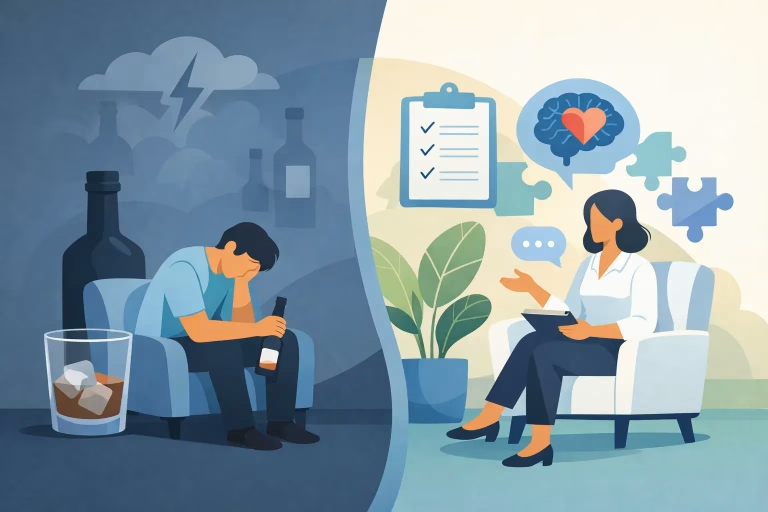

When Should I Seek Counselling? Signs to Notice
You may be getting through the day, answering messages, working, caring for other people and telling yourself that things are not really bad enough to warrant help. Yet something feels heavier than it used to. If you are wondering, when should I seek counselling, that question alone may be worth listening to with care.
Counselling is not reserved for a breaking point. Many people begin because they are tired of carrying something alone, repeating a painful pattern, or feeling disconnected from themselves and the people around them. You do not need to have the right words before reaching out. A space to begin making sense of what is happening can be enough.
Counselling is not only for a crisis
There is a common belief that therapy should be saved for the most serious moments: a bereavement, a relationship ending, a mental health diagnosis or an event that has left life unrecognisable. Counselling can certainly be a source of support at those times. But it can also help before things reach that point.
Sometimes the signs are quiet. You may notice that you no longer enjoy what once mattered to you, that irritation arrives more quickly, or that rest does not leave you feeling restored. Perhaps you are functioning outwardly but feel anxious, flat, ashamed or alone underneath. These experiences deserve attention, even if you cannot point to one clear cause.
Seeking support early is not overreacting. It can be a way of caring for yourself before strain becomes exhaustion. Equally, if you have waited a long time, there is no judgement in that. People often seek counselling only once their usual ways of coping have stopped working. Wherever you are starting from, you can start at your own pace.
When should I seek counselling? Notice the patterns
A difficult day or a stressful week does not necessarily mean you need therapy. Life includes periods of pressure, sadness, uncertainty and change. What can be helpful to notice is whether a feeling is lingering, growing, or affecting the way you live and relate to others.
Counselling may be worth considering if you recognise several of the following experiences:
- You feel persistently anxious, low, overwhelmed, numb or emotionally on edge, even when there is no obvious reason.
- Work, caring responsibilities or everyday tasks are leaving you depleted, and rest no longer feels like it is enough.
- You are relying more heavily on alcohol, drugs, food, sex, spending, work or other behaviours to manage difficult feelings.
- The same conflict, relationship pattern or sense of rejection keeps appearing, and you are unsure how to change it.
- A past experience, including trauma, loss or a difficult childhood, still seems to shape how safe, worthy or connected you feel now.
- You are withdrawing from people, losing confidence, struggling with sleep, or finding it harder to concentrate and make decisions.
None of these signs has to be dramatic to matter. The question is not whether someone else would think your experience is serious enough. It is whether life feels harder than it needs to, and whether having thoughtful support could bring some relief or clarity.
When the past is still present
Some people come to counselling because a current situation has stirred something old. A criticism at work may bring an unexpectedly strong feeling of shame. A partner becoming distant may feel unbearable. You may understand logically that the moment is manageable, yet your body and emotions respond as though there is much more at stake.
This does not mean there is something wrong with you. Our earlier experiences can shape how we protect ourselves, trust others and respond to stress. An integrative counselling approach can make room for both what is happening now and the experiences that may sit beneath it, without forcing you to revisit anything before you are ready.
When coping is becoming costly
We all find ways to get through difficult periods. Some strategies offer short-term relief but can become painful or restrictive over time. You might be drinking more than you intend to, checking out emotionally, overworking, avoiding difficult conversations, or turning harshly against yourself after small mistakes.
Counselling is not about taking away your coping mechanisms and leaving you exposed. It is about becoming curious about what they are doing for you, what they may be costing you, and what other forms of support might become possible. That process needs compassion, not blame.
You do not need a diagnosis or a perfect reason
It is understandable to hesitate when you cannot neatly name the problem. Perhaps you feel fortunate in many areas of your life and worry that asking for help would seem indulgent. Perhaps others have been through more, or you believe you ought to be able to handle things independently.
But emotional pain is not a competition. Feeling lost, dissatisfied, lonely, stuck or unlike yourself is reason enough to talk. Counselling can offer a private, non-judgemental relationship in which you do not have to perform being fine or explain your feelings perfectly.
It can also be helpful when you are facing a decision. Changes in a relationship, career, family role or identity can bring uncertainty even when they are wanted changes. Therapy cannot make choices for you, but it can give you room to hear your own thoughts more clearly and understand what matters to you.
What if things are manageable, but not good?
This is often the point at which people delay. They are still going to work, still meeting obligations, still able to laugh with friends. From the outside, they may appear to be coping well. Inside, however, they might feel constantly braced for the next demand.
There is no rule that says you must wait until you cannot function. In fact, counselling can be particularly valuable when you have enough stability to reflect, rather than only trying to survive each day. It can help you understand recurring patterns, strengthen boundaries, build self-worth and make more intentional choices.
That said, therapy is not a quick fix, and it does not remove every difficulty from life. At times, counselling can bring up feelings that have been pushed aside. A skilled therapist will work with you carefully, at a pace that feels manageable, helping you develop safety and grounding alongside insight.
Taking the first step does not have to feel formal
For many people, the hardest part is not the counselling itself but making contact. You may worry about saying the wrong thing, being judged, or discovering that your problems are not valid enough. These fears are common, especially if you have spent a long time putting other people first.
A first conversation is simply an opportunity to see how it feels. You can share as much or as little as you wish. You might begin with, “I do not know where to start,” or “I have been struggling for a while.” That is enough.
At The Psychological Oasis, the aim is to make that beginning feel human and unpressured. Counselling is a collaborative process, not something done to you. Feeling comfortable with your therapist matters, and it is reasonable to ask questions about how they work, whether sessions are online, what the fee is, and whether the approach feels right for you.
When urgent support is needed
Counselling can offer meaningful ongoing support, but there are times when immediate help is needed. If you feel at risk of harming yourself or someone else, cannot keep yourself safe, or are experiencing a mental health emergency, contact 999, attend A&E, or call NHS 111 and select the mental health option where available. In the UK, Samaritans can also be reached on 116 123 for round-the-clock emotional support.
If you are outside the UK, contact your local emergency services or an urgent crisis service in your area. You deserve prompt support in moments of immediate risk.
You do not need to prove that you are struggling before you allow someone to sit alongside you. Sometimes seeking counselling begins not with certainty, but with a small, honest recognition: “I do not want to keep feeling this way on my own.” That recognition can be a gentle and meaningful place to begin.