
Online Counselling Versus Face to Face Therapy
Therapy often begins with a small but significant question: where might I feel able to speak honestly? When considering online counselling versus face-to-face therapy, there is no universally right answer. What matters is finding a setting that feels safe enough for you to begin, and a therapist with whom you can build trust at your own pace.
For some people, joining a session from a familiar room makes it easier to speak about painful experiences. For others, leaving home and sitting with someone in person creates a helpful boundary around the therapeutic hour. Both can offer meaningful, professional support. The differences are practical, but they can also shape how therapy feels.
Online counselling versus face-to-face: the real difference
The central difference is not the quality of care. A thoughtful therapeutic relationship can develop online or in person. Rather, the question is how each format fits into your life, your needs and your sense of emotional safety.
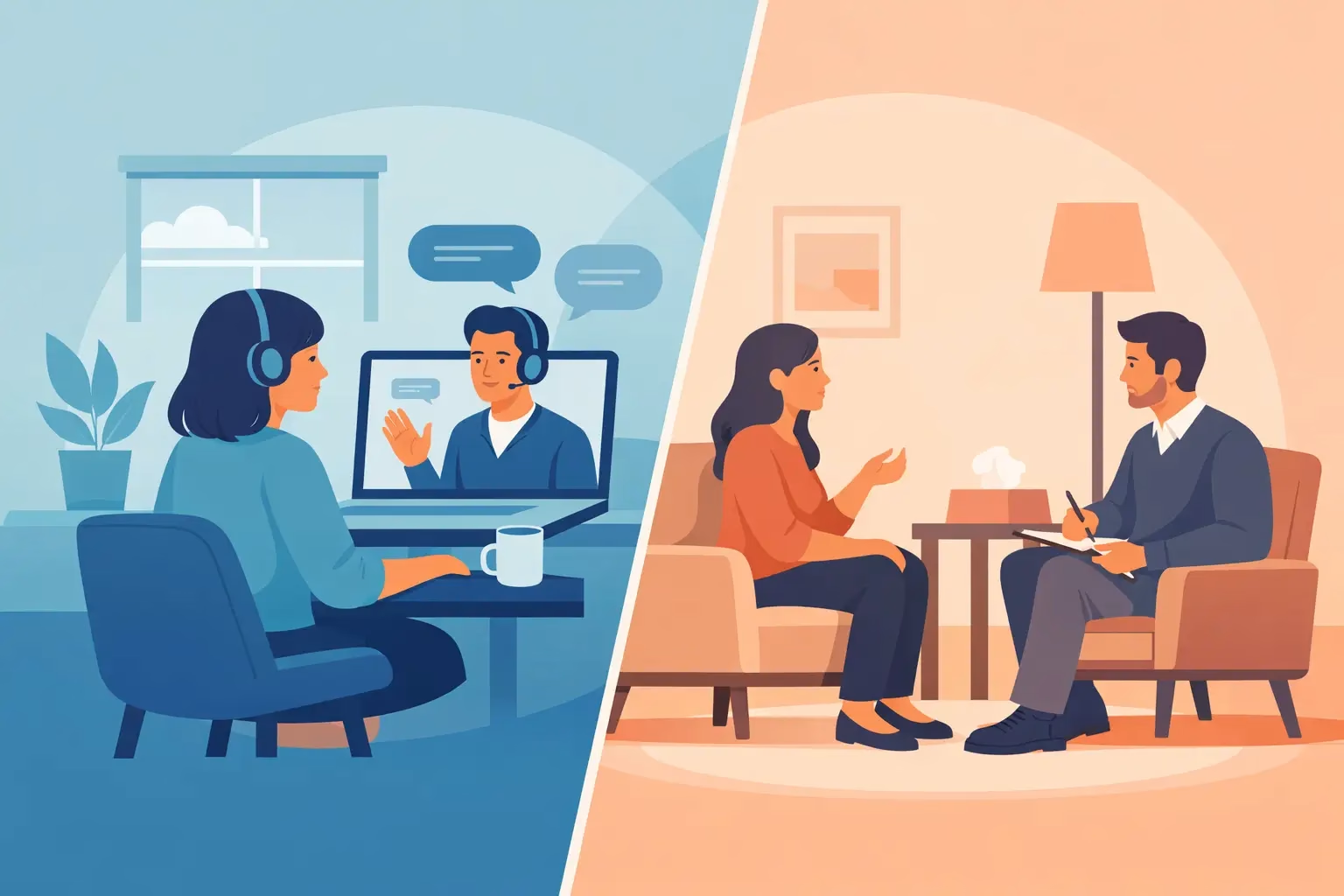
Online counselling takes place through secure video sessions, usually from your home or another private location. It can reduce the effort involved in attending therapy, particularly if you are busy, exhausted, living outside a major city, managing a health condition or caring for others. There is no journey to plan, no waiting room and no need to explain where you are going.
Face-to-face therapy involves meeting in a shared physical space. Some people value the quiet transition of travelling to an appointment and leaving again afterwards. The therapy room can feel separate from daily responsibilities, difficult relationships or the pressure of work. Being physically present may also feel more natural if you find video calls tiring, distracting or emotionally distant.
Neither preference is a test of commitment or courage. Choosing the format that makes therapy more possible is often the most useful choice.
When online counselling may feel right
Online therapy can be particularly supportive when life already feels full. If anxiety, low mood, burnout or overwhelm make travelling feel like another burden, removing that step can make regular support more manageable. A session can fit around work, family life, mobility needs or living arrangements without demanding hours of additional time.
It can also offer welcome privacy. You may not want to sit in a public waiting area or travel across town after an emotional conversation. Attending from home can allow you to make a cup of tea, wrap yourself in a blanket, or give yourself a few quiet minutes afterwards before returning to your day.
For people who have moved frequently, live in rural areas, travel for work, or want to work with a UK-accredited therapist while abroad, online counselling provides continuity. The relationship does not have to end simply because your postcode changes.
There can be a gentler emotional distance, too. Speaking through a screen may initially feel safer when shame, trauma, addiction or relationship difficulties are hard to name aloud. For some, that slight distance makes honesty more available. Over time, the screen often becomes far less noticeable than people expect.
Online work does require a reasonably private space and a reliable connection. If you share a home, it may help to think beforehand about where you can speak without being overheard. Headphones, sitting in a parked car where safe and appropriate, or arranging a time when others are out can sometimes help. Your comfort and confidentiality deserve consideration.
What face-to-face therapy can offer
In-person sessions can bring a stronger sense of being held in a dedicated space. You arrive, settle into the room and have a period of time that belongs only to you. For someone whose home feels crowded, stressful or unpredictable, that separation can be deeply valuable.
Some people also find it easier to connect when they are in the same room as their therapist. Small shifts in posture, pauses and non-verbal communication can feel more immediate in person. This does not mean online therapy lacks connection, but it does mean your own experience of closeness matters.
Face-to-face work may be preferable if screens are a regular source of fatigue, if your internet connection is unreliable, or if you feel you would struggle to remain present in your usual surroundings. The journey itself can become part of the rhythm of therapy: a chance to prepare before the session and decompress afterwards.
There are practical trade-offs. Travel takes time and money, appointments may be harder to fit around responsibilities, and a fixed location can limit choice of therapist. At The Psychological Oasis, face-to-face sessions near Harley Street in London are available only in limited circumstances, while online counselling allows support to remain accessible for adults across the UK and internationally.
Your environment matters more than the format
A common worry is that online therapy cannot be as personal as meeting in a room. In practice, the quality of therapy rests less on the location and more on the relationship: whether you feel listened to, respected and able to bring what is true for you.
A compassionate therapist will not expect you to arrive with a polished story. You may feel unsure, tearful, numb, angry or unable to explain why you have reached out. Therapy can still begin there. The right setting is the one that helps you feel able to show up as you are, rather than the one you think you ought to choose.
It may be helpful to ask yourself a few simple questions. Where am I likely to feel least rushed? Do I have privacy at home? Would leaving the house give me breathing space, or would it make attending harder? When I imagine speaking about something personal, does a screen feel reassuring or restrictive?
Your answers may change. Someone might begin online because it feels more manageable, then later prefer in-person sessions if they become available. Another person may assume they need a therapy room, only to discover that the familiarity of home helps them feel more open. Flexibility is not indecision. It is paying attention to what you need.
Safety, privacy and difficult moments
Both online and face-to-face counselling should be confidential, professionally boundaried and led with care. Before online sessions, it is useful to agree what will happen if the connection drops or if you become very distressed. Knowing there is a plan can help you feel more secure.
If you are at immediate risk of harming yourself or someone else, or need urgent mental health support, counselling alone may not be the right level of help in that moment. Emergency services, your GP, NHS 111 or a local crisis team may be better placed to provide immediate assistance. Reaching for urgent help is not a failure. It is a way of taking your wellbeing seriously.
For ongoing concerns such as anxiety, painful patterns in relationships, loss, low self-esteem, trauma or feeling emotionally disconnected, therapy offers a regular space to slow down and make sense of what has been difficult to carry alone.
Choosing without putting pressure on yourself
You do not need to be completely certain before making contact. Many people come to therapy with mixed feelings: wanting support while worrying they will say the wrong thing, become too emotional, or find the process uncomfortable. Those concerns are understandable, especially if you have spent a long time coping quietly.
The most helpful first step is usually a simple conversation about what you are looking for and what feels possible. A gentle, human beginning can tell you more than hours of research. You can ask about the approach, session format, privacy, fees and whether online work is likely to suit your circumstances.
Whether you choose online counselling or face-to-face therapy, you deserve support that does not add to your pressure. The place where you begin matters, but being met with patience, respect and genuine attention matters more. You do not have to have everything worked out before you take that first step.