
10 Signs You Need Counselling Support Today
There is not always a single moment when you realise you need help. Often, the signs you need counselling support appear quietly: you are getting through the day, answering messages, going to work, caring for others, yet something inside feels increasingly difficult to carry.
Counselling is not only for a crisis or a diagnosis. It can be a place to pause, make sense of what has been happening, and be met without judgement. If you have been wondering whether your feelings are ‘serious enough’, that question itself may be worth bringing into a supportive conversation.
10 signs you need counselling support
1. You feel overwhelmed more often than settled
Everyone has demanding periods. But when the sense of pressure rarely lifts, even small tasks can begin to feel unmanageable. You may feel constantly behind, tense for no clear reason, or unable to switch off at the end of the day.
Overwhelm can look different from person to person. For some, it is racing thoughts and anxiety. For Others, it is numbness, procrastination, irritability, or a feeling of wanting to withdraw from everything. Counselling can help you slow the cycle down and understand what your mind and body may be trying to communicate.
2. Your mood has changed and you do not feel like yourself
Perhaps you used to enjoy things that now feel flat. You may be more tearful, impatient, low, or disconnected than usual. Sometimes people notice this only after a loved one comments that they seem distant or exhausted.
A change in mood does not need an obvious explanation to deserve care. It may relate to grief, stress, relationships, hormonal changes, work pressures, earlier experiences, or several things at once. You do not have to identify the reason before seeking support.
3. Anxiety is shaping your choices
Anxiety can be loud, with panic, dread, physical tension, or a fear that something bad will happen. It can also be quieter: repeatedly checking things, avoiding calls, cancelling plans, overthinking conversations, or needing everything to feel certain before you can act.
When anxiety begins to narrow your life, counselling offers space to explore it at your own pace. The aim is not to force you to ‘get over it’, but to understand its roots and develop a kinder, steadier relationship with yourself.
4. You are relying on coping habits that no longer feel helpful
Many coping strategies begin as ways to get through a difficult time. Drinking, using substances, compulsive scrolling, overworking, gambling, comfort eating, or shutting people out may offer short-term relief. Over time, however, they can bring shame, secrecy, financial strain, conflict, or an even stronger sense of disconnection.
You do not need to hit a dramatic rock bottom to talk about addiction or compulsive behaviour. A compassionate therapeutic space can help you look beneath the habit, including the feelings it may be protecting you from, without reducing you to it.
5. Relationships feel painful, confusing or repetitive
You may find yourself having the same argument with a partner, feeling anxious when someone becomes close, or choosing people who cannot meet you emotionally. Perhaps you are always the one who keeps the peace, takes responsibility, or feels forgotten.
Relationship difficulties are rarely about one person being wholly at fault. Counselling can help you notice patterns, understand your needs and boundaries, and consider how earlier attachment experiences may still be influencing the way you relate to others now.
6. Something from the past still feels present
Trauma is not measured by whether others think an event was ‘bad enough’. Experiences of abuse, neglect, betrayal, bullying, loss, frightening events, or a childhood in which you did not feel safe can remain with you in complex ways.
You might experience intrusive memories, nightmares, hypervigilance, shame, difficulty trusting people, or strong reactions that seem out of proportion to the present moment. You may also remember very little but sense that certain situations leave you frozen, panicked, or emotionally absent. Therapy should not rush you into revisiting painful experiences. It can begin with building safety, trust, and stability.
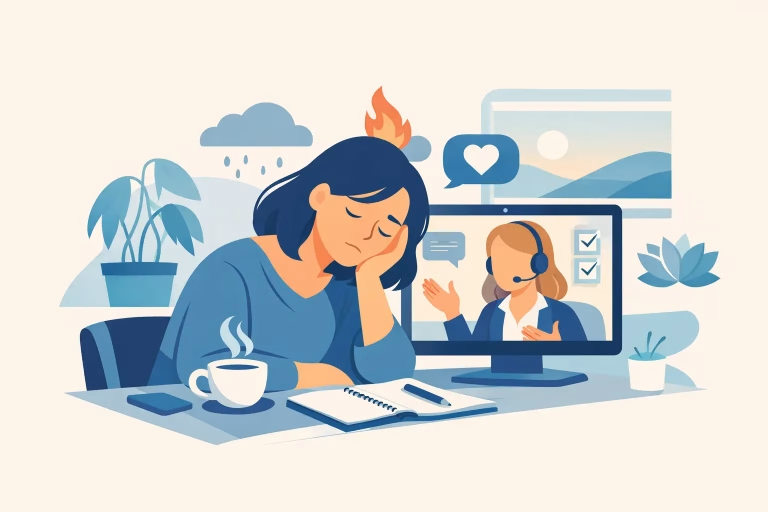
7. You are burnt out, but rest is not restoring you
Burnout is more than being tired after a busy week. It can leave you drained, cynical, emotionally flat, or unable to concentrate, even after time away from work. People who are conscientious, caring, or used to holding everything together often push through for a long time before recognising how depleted they are.
Rest matters, but it may not be enough if the pressures in your life, expectations of yourself, or difficulty saying no remain unchanged. Counselling can help you understand what has led to this point and make room for recovery that is realistic, not another demand to perform.
8. Your self-worth depends on keeping everyone happy
If you feel you must be useful, agreeable, successful, attractive, or endlessly capable to deserve care, life can become exhausting. You may struggle to accept compliments, compare yourself constantly, or feel guilty when you put your own needs first.
Low self-esteem is not a personal failing. It often grows from messages we have received in relationships, families, schools, or workplaces. In counselling, it is possible to explore those messages with curiosity and begin developing a more compassionate inner voice.
9. You are isolated, even around other people
Loneliness is not always about being physically alone. You can be surrounded by colleagues, friends, or family and still feel unseen. Perhaps you find it hard to tell people how you are really doing, fear being a burden, or have learned to present a version of yourself that feels acceptable.
A therapeutic relationship cannot replace the people in your life, but it can offer a private, consistent space in which you do not have to pretend. Being heard carefully can make it easier to reconnect with your own feelings and, when you are ready, with others.
10. You keep thinking, ‘I should be able to cope’
This thought can keep people stuck for years. You may tell yourself that others have it worse, that you have no right to complain, or that asking for support means you are weak. Yet coping alone is not the same as coping well.
Counselling is not an admission of failure. It is a decision to take your inner life seriously. You are allowed to seek support before things become unbearable, and you are allowed to need more than advice from people who care about you.
When should you seek counselling support?
There is no perfect threshold. If difficult feelings are affecting your sleep, work, relationships, health, confidence, or ability to enjoy life, it may be a helpful time to speak with someone. Equally, you might simply have a persistent sense that something is not right, even if you cannot put it into words.
The right time depends on your circumstances. Some people come to counselling after a particular event, while others arrive because they are tired of repeating a pattern they cannot explain. You do not need to have a clear goal at the start. A gentle first conversation can help you decide whether counselling feels right for you.
What a first conversation can feel like
Starting therapy can feel exposing, especially if you are used to managing alone. You may worry that you will not know what to say, become emotional, or be judged for your choices. A good therapeutic space does not require you to tell your whole story immediately.
At The Psychological Oasis, the approach to beginning is intentionally calm and human. There is room to ask questions, share only what feels manageable, and find out whether the support feels like a good fit. Counselling works best when you feel respected and able to move at a pace that feels safe.
If you are in immediate danger, feel unable to keep yourself safe, or are at risk of harming someone else, seek urgent support through 999, your nearest A&E department, or an appropriate crisis service. Counselling can be valuable, but urgent situations need immediate help.
You do not have to wait until you can no longer cope. Sometimes the most caring thing you can do is let someone sit alongside you while you work out what you need next.