
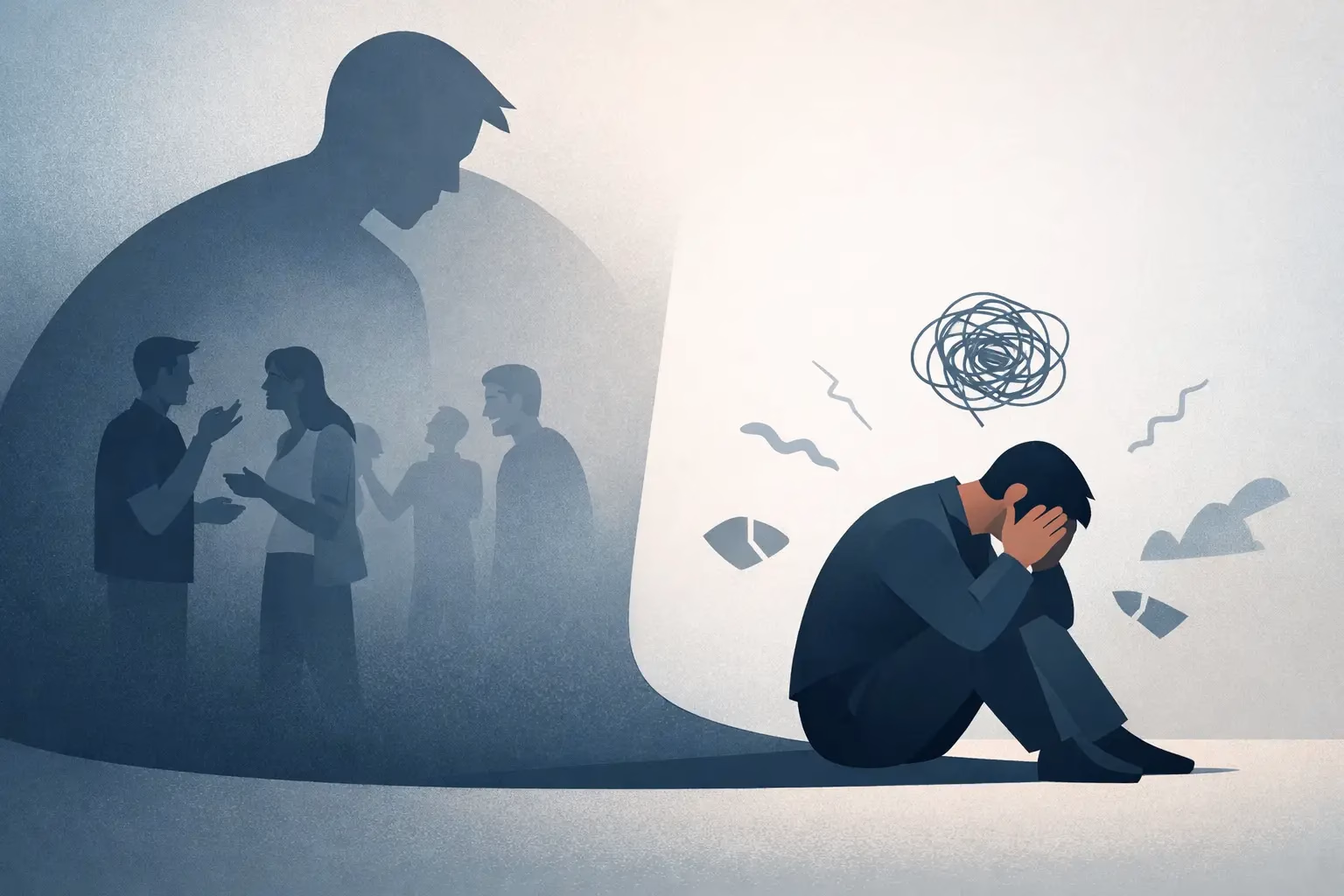
Why Does Shame Persist Long After the Moment?
A small mistake at work, a tense conversation, a relapse, a memory that returns without warning – and suddenly the feeling is far larger than the event itself. You may understand, logically, that you are human and that no one gets everything right. Yet the question remains: why does shame persist when the moment has passed, the apology has been made, or the danger is no longer present?
Shame can feel like a verdict on who you are rather than a response to something that happened. It may say, quietly or relentlessly, “There is something wrong with me.” This is one reason it can be so difficult to shift through reassurance alone. Shame is not usually asking to be argued with. More often, it is asking to be understood.
Why does shame persist beyond the original event?
Shame often persists because it has roots that reach beyond the present. A comment, failure or difficult choice can activate an older emotional learning: perhaps that being needy was unacceptable, anger made you unlovable, mistakes brought humiliation, or being different meant being left out.
These messages are not always spoken directly. Children learn them through tone, silence, facial expressions, family rules and what happens when they are upset. If comfort was inconsistent, criticism was common, or love felt conditional, it can become safer to blame yourself than to recognise that the people around you could not meet your needs. That self-blame may have helped you make sense of an impossible situation at the time. Later, it can become an exhausting inner habit.
The mind also remembers emotional threat differently from an ordinary fact. You may know that you are no longer that frightened child, awkward teenager or overwhelmed person trying to cope in the only way available. But your nervous system can still respond as though exposure, rejection or punishment is close at hand. Shame can arrive in the body first: a hot face, a tight chest, an urge to disappear, a feeling of going blank. By the time you try to reason with it, it may already feel convincing.
This does not mean you are stuck or broken. It means the feeling has a history, and histories deserve patience.
Shame and guilt are not the same
Guilt can be painful, but it is often connected to a specific action: “I hurt someone”, “I broke a promise”, or “I wish I had acted differently.” When guilt is proportionate and met with accountability, it can help us repair, learn and make a different choice next time.
Shame is more global. It turns an action into an identity: “I am selfish”, “I am disgusting”, “I always ruin things.” Instead of inviting repair, it tends to invite hiding. A person may withdraw from friends, avoid applying for work, keep their struggle secret, or push away someone who cares because closeness feels too exposing.
There are times when guilt and shame overlap. If you are living with addiction, for example, you may carry genuine regret about the impact of your behaviour alongside a much deeper belief that you are beyond help. Separating these feelings is not about avoiding responsibility. It is about making room for responsibility without turning it into self-destruction. People tend to make more sustainable changes when they are supported to face what happened without being reduced to it.
The social nature of shame
Shame grows in imagined or real judgement. It asks, “What will people think if they knew?” This makes it particularly powerful in areas people are often taught to conceal: mental health difficulties, trauma, financial problems, relationship conflict, sexuality, parenting struggles, grief, or not coping as well as everyone assumes.
Modern life can add another layer. Social media and professional culture can create the impression that other people are composed, successful and emotionally certain. Comparing your private pain with someone else’s public presentation can make ordinary vulnerability feel like personal failure.
Some shame is also shaped by wider social messages. Experiences of racism, class prejudice, ableism, homophobia, sexism, body judgement or other forms of exclusion can leave a person carrying beliefs that were imposed upon them. The shame may feel personal, but it did not begin solely inside them. Recognising this does not erase the pain. It can, however, start to return the burden to where it belongs.
Why pushing shame away can make it stronger
When shame appears, it is understandable to want it gone quickly. You might overwork, people-please, numb out, scroll, drink, withdraw, become perfectionistic or tell yourself to get over it. These responses can bring short-term relief, which is why they are so compelling.
The difficulty is that avoidance can quietly confirm shame’s message: this feeling is too awful to be seen. Over time, the feared thought gains more authority. The person may become increasingly careful, isolated or harsh with themselves, while the original feeling remains untouched beneath the surface.
This is not a criticism of coping strategies. Many began as ways of getting through periods when there was little support available. The question is whether they still protect you now, or whether they are keeping you alone with a painful belief.
Meeting shame with curiosity rather than force
A gentler response starts with noticing the difference between having a shame response and being shameful. You may try naming what is happening: “I am feeling exposed right now”, or “A part of me is convinced I have failed.” This creates a little space between you and the thought, without demanding that you immediately feel better.
It can help to ask what the feeling is trying to prevent. Is it protecting you from rejection? Trying to make you perfect enough to avoid criticism? Warning you not to need anyone? The answer may not be clear straight away. Shame often softens slowly, especially when it has been present for many years.
Compassion is sometimes misunderstood as letting yourself off the hook. It is not. Compassion means bringing honesty and care to the same place. You can acknowledge harm, make amends where possible and still refuse to speak to yourself with cruelty. In fact, a less punitive inner voice often makes it easier to remain present with difficult truths.
Simple practices can support this process. Writing down the exact words shame uses may reveal how absolute and familiar they are. Noticing where the feeling sits in the body can help you recognise its arrival sooner. Sharing a small, manageable part of your experience with someone trustworthy can challenge the belief that being known will always lead to rejection. None of these is a quick fix, and you do not need to force disclosure before you feel ready.
When therapy can help with persistent shame
Shame often becomes less powerful in a relationship where you do not have to perform, explain everything perfectly or prove that your pain is serious enough. Therapy offers a confidential space to explore the experiences, relationships and expectations that have shaped your self-view, at your own pace.
An integrative approach can be particularly helpful because shame is not only a thought to challenge. It may be held in memories, patterns of relating, physical responses and the way you speak to yourself. Therapy can help you notice these patterns with greater clarity, develop steadier ways of regulating overwhelm, and find language for feelings that once had to stay hidden.
For some people, the first meaningful change is not that shame disappears. It is that they no longer automatically obey it. They make the call, attend the gathering, ask for help, set a boundary, or allow someone to see that they are struggling. These can be quiet but profound acts of recovery.
You do not need to earn kindness by becoming flawless first. If shame has been with you for a long time, approaching it gently may feel unfamiliar. That is all right. A different relationship with yourself can begin with the smallest recognition: this feeling is painful, it has a reason for being here, and you do not have to face it alone.