
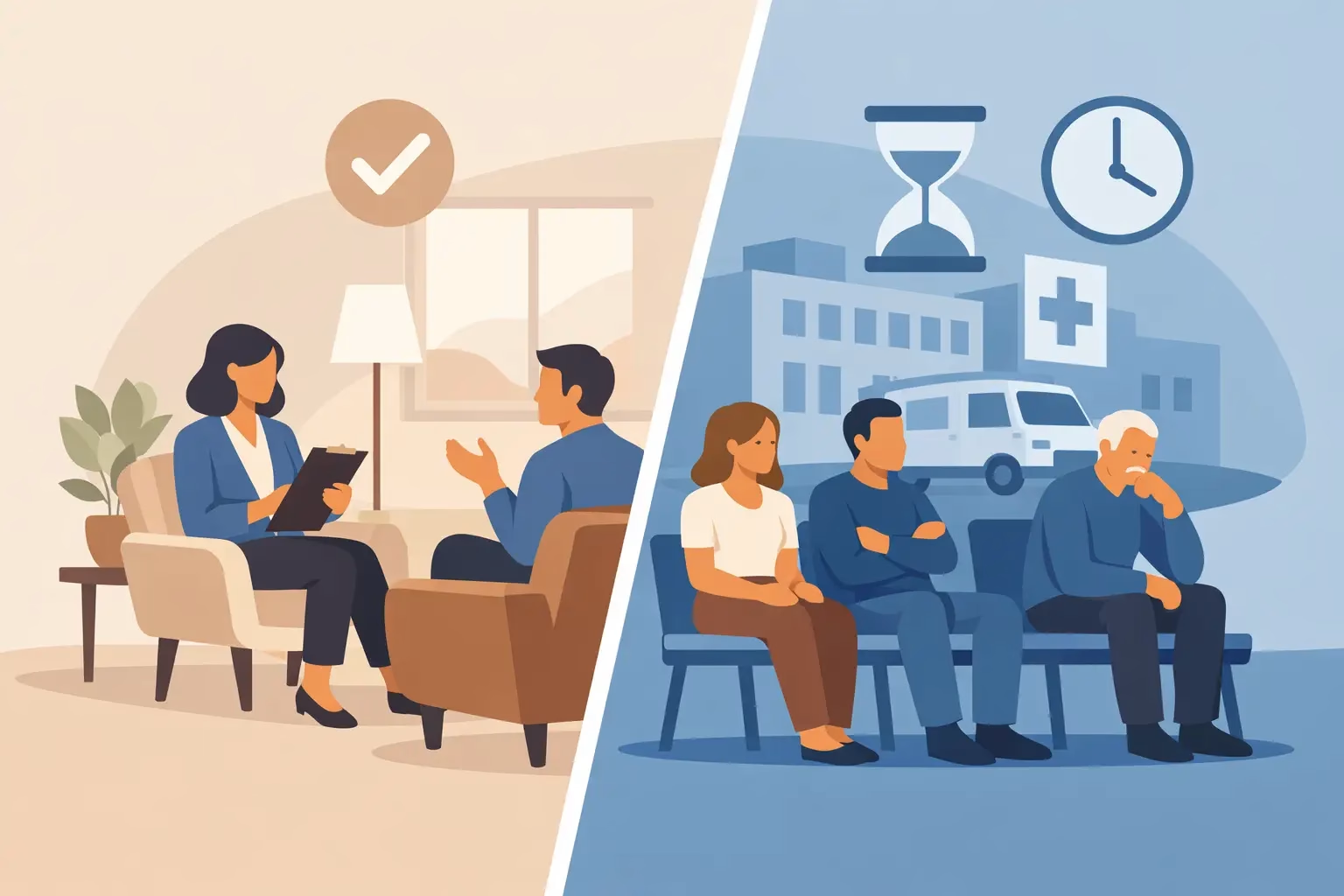
Private Therapy vs NHS Waiting Lists: Your Options
When you are already feeling overwhelmed, the thought of waiting weeks or months for support can make everything feel heavier. The question of private therapy vs NHS waiting lists is not simply about choosing one service over another. It is about finding a form of help that feels possible, safe and right for you at a time when you may be carrying a great deal alone.
The NHS provides vital mental health care, often free at the point of use, and many people receive meaningful support through it. Private therapy can offer a different route: one that may allow you to begin sooner, choose your therapist and work at a pace that feels more personal. Neither option is universally right. Your needs, finances, urgency and previous experiences of asking for help all matter.
Why waiting can feel so difficult
A waiting list is not a judgement on the seriousness of what you are going through. NHS services have to make difficult decisions with limited capacity, and people whose safety is at immediate risk will usually need to be seen most urgently. Yet that does not make the period in between easy.
Anxiety, burnout, low mood, relationship strain and the effects of trauma do not always stay still while you wait. You might be functioning on the surface – going to work, caring for others, replying to messages – while privately feeling close to your limit. For some people, the hardest part is not knowing when support will begin or what it will look like when it does.
There can also be several stages before therapy starts: speaking to a GP, completing an assessment, being directed to a particular service and waiting for an available appointment. This process helps services match people to care, but it can feel formal or tiring when you are already emotionally exhausted.
Private therapy vs NHS waiting lists: the practical differences
The clearest difference is usually speed. A private therapist may have availability within days or weeks, although this varies. This can be particularly helpful when you have reached a point where you know you need to talk, rather than waiting until things become more severe.
Private therapy also usually gives you more choice over who you work with. You may look for someone with experience in trauma, addiction, attachment difficulties, self-esteem, relationship concerns or emotional overwhelm. You may prefer online sessions, a therapist of a particular gender, or an approach that feels less structured and more exploratory. The relationship with your therapist is a central part of therapy, so this choice can matter deeply.
Continuity is another consideration. In private practice, you will often see the same therapist regularly for as long as you both agree the work is useful. NHS talking therapies can also be highly effective, but the number of sessions, type of treatment and availability of longer-term support may be shaped by local service criteria and demand.
Cost is, understandably, a significant difference. NHS support is generally free, while private counselling involves a session fee. Some private practitioners offer concessionary rates, which may make ongoing therapy more manageable for students, people on lower incomes or those in difficult circumstances. It is always reasonable to ask about fees before you commit. Therapy should not leave you under further financial strain.
What the NHS may offer well
It is easy to frame private therapy as the quicker answer, but that can oversimplify things. NHS services can provide evidence-based support for common mental health difficulties, including anxiety and depression, and may offer group programmes, guided self-help, cognitive behavioural therapy and specialist care where appropriate.
For many people, this support is enough to create real change. It can be a sensible option if cost is a major concern, if your needs fit well with the service offered locally, or if you are comfortable with a more structured, time-limited approach.
Your GP can also be an important part of your care, particularly where mental and physical health overlap. If medication, medical investigation, sick notes or referral to specialist services may be needed, speaking with your GP can be helpful alongside therapy.
What private therapy can make possible
Private therapy is not necessarily more effective because it is private. What it can offer is greater flexibility around the process. You may be able to arrange sessions around work, caring responsibilities or travel. Online therapy can mean support from your own familiar space, without the time and cost of getting to an appointment.
It may also give you room to bring the issues that do not fit neatly into one box. Perhaps you are not sure whether what you feel is anxiety, grief, the legacy of childhood experiences or a relationship pattern you keep finding yourself in. Perhaps you have stopped recognising yourself after years of coping. An integrative therapist can work with the whole picture rather than rushing to label it.
For people who feel wary of therapy, the first contact matters. A gentle, human conversation can feel very different from being asked to explain your life through a long form before you are ready. You do not need to have the right words, a clear diagnosis or a fully formed goal to begin. It is enough to know that something is difficult and that you would like not to face it alone.
Choosing based on your needs, not pressure
You do not have to make this decision as though there is only one route available. Some people join an NHS waiting list while beginning private therapy, then review what feels right when an NHS appointment becomes available. Others choose private sessions for a short period during a particularly difficult time. Some feel best supported through NHS care alone.
It can help to ask yourself a few quiet questions. Do you need support soon, or are you able to wait? Is a particular therapeutic relationship or specialism important to you? Would regular weekly sessions feel manageable financially? Do you need a highly structured programme, or space to talk more openly about what is happening beneath the surface?
There is no virtue in struggling for longer than necessary to prove that you can cope. Equally, there is no failure in choosing free support if private therapy is not affordable. The best choice is the one that gives you a realistic chance to be heard and supported.
How to check that private therapy is a safe choice
Finding a therapist can feel vulnerable, especially if you have been let down, dismissed or misunderstood before. Looking for professional registration is a useful starting point. In the UK, counsellors and psychotherapists may be registered or accredited with recognised professional bodies, which set ethical standards and provide a route for raising concerns.
You can also ask practical questions before booking: how sessions work, what the fee is, whether concessions are available, what their cancellation policy is and what experience they have with the concerns you wish to bring. A good therapist should be able to answer clearly, without pressure or promises that therapy will be quick or easy.
Pay attention to how the contact feels as well. You are not looking for someone who has all the answers immediately. You are looking for someone who listens carefully, respects your boundaries and helps you feel safe enough to be honest over time.
If you need help urgently
Private therapy and NHS talking therapy are not emergency services. If you feel at immediate risk of harming yourself or someone else, or you cannot keep yourself safe, call 999 or go to A&E. You can also contact NHS 111 and select the mental health option where available. Reaching out in a crisis can feel frightening, but you deserve immediate support.
For concerns that are urgent but not an emergency, speaking to your GP or local NHS mental health service may help you understand the options in your area. You do not need to wait until you are in crisis for your feelings to count.
Starting therapy is often less about having certainty and more about allowing yourself one small next step. Whether you choose NHS support, private sessions, or a combination of both, the aim is not to make a perfect decision. It is to find a place where you can begin to feel less alone, at your own pace.