How to Recognise Addiction Triggers Gently
A craving can seem to arrive from nowhere: on the train home, after an awkward conversation, late at night when the house is quiet. Yet when you begin to look closely, there is often a pattern underneath. Learning how to recognise addiction triggers is not about blaming yourself for having urges. It is about understanding what your mind and body may be trying to manage, soothe or escape.
Triggers are not proof that you have failed or that recovery is impossible. They are signals. With time, patience and the right support, those signals can become easier to notice before they carry you into an automatic response.
What addiction triggers can look like
An addiction trigger is anything internal or external that increases the urge to use a substance or repeat a behaviour. This might relate to alcohol, drugs, gambling, compulsive shopping, pornography, food, gaming or another pattern that has begun to feel difficult to control.
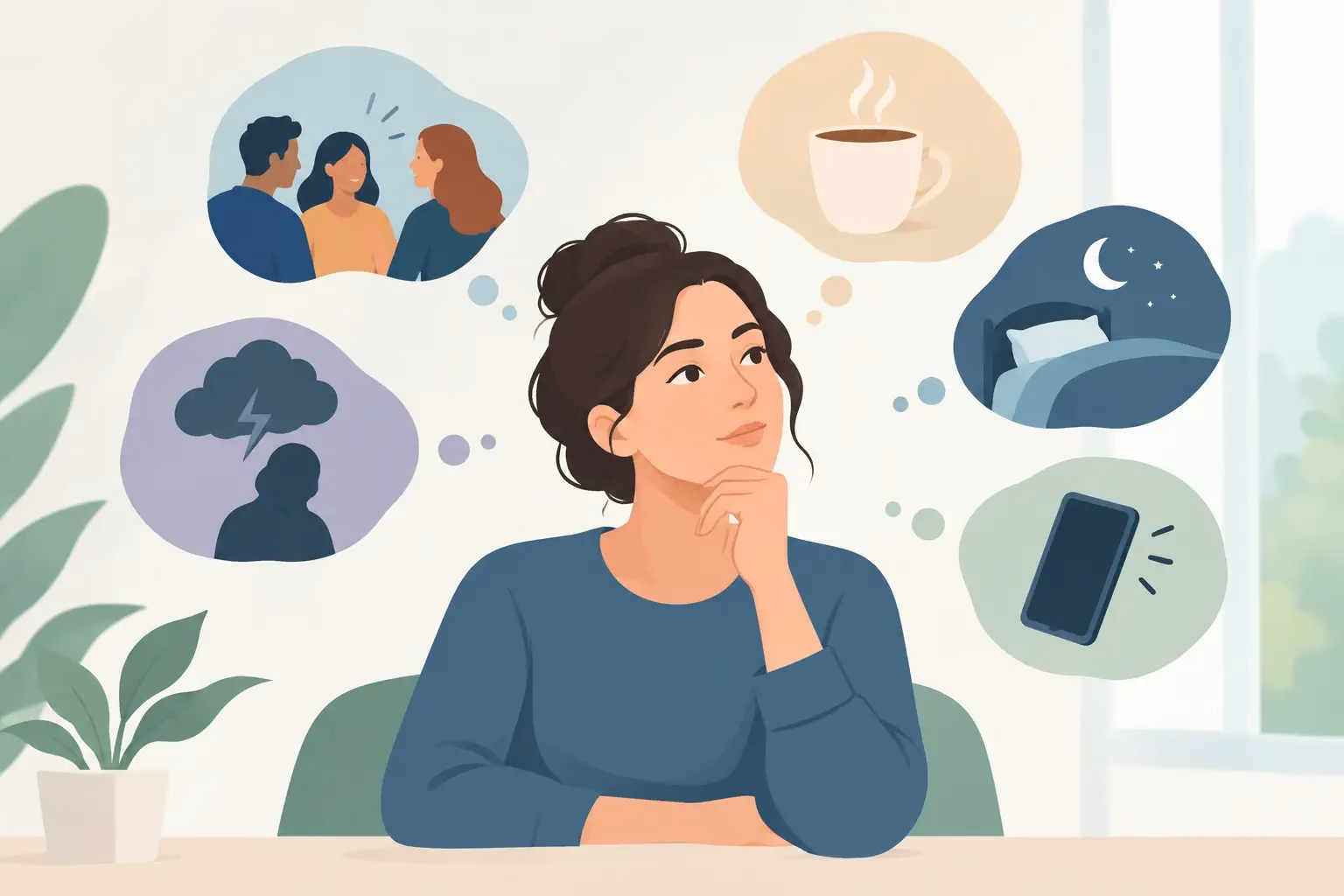
Some triggers are obvious. Passing a familiar pub, receiving a pay cheque, seeing a particular person or being offered a drink can bring an immediate pull. Others are quieter and more personal. A feeling of rejection, boredom, loneliness, pressure at work or even a sense of celebration may sit beneath the urge.
The same situation will not affect everyone in the same way. For one person, Friday evening may mean relief and connection. For another, it may bring a sudden emptiness after a demanding week. The useful question is not, Should this affect me? It is, What tends to happen inside me when this happens?
Recognising addiction triggers before the urge takes over
It can help to think of a trigger as the start of a chain rather than the whole story. Something happens, a feeling or thought appears, the body reacts, and the urge follows. Sometimes this unfolds over hours. Sometimes it happens in seconds.
Begin by noticing the moment just before you act. You might ask yourself: what was I doing? Who was I with? What had happened earlier that day? What feeling was hardest to sit with? There is no need to interrogate yourself. A few gentle observations are enough to begin.
Pay attention to physical signs too. Restlessness, tightness in the chest, a racing mind, tiredness, irritation or a hollow feeling in the stomach can all be part of your early warning system. For some people, the urge first appears as a persuasive thought: Just this once, I deserve it, or I cannot cope with this feeling. Naming that thought can create a small but meaningful pause.
Look for repeated settings and times
Patterns are often easier to see over several days or weeks. You may notice that urges are stronger after social events, when you are alone, on particular dates, after poor sleep or when money arrives. It may be useful to jot down a few words in your phone or a notebook after an urge has passed.
You do not need a detailed diary. A simple record of the time, situation, emotion and what you did next can reveal a great deal. The aim is not to monitor yourself perfectly. It is to make the pattern less mysterious.
Notice the emotional triggers beneath the surface
Addictive behaviours often began as a way of coping. They may have offered temporary comfort, numbness, stimulation, confidence or relief when other forms of support felt unavailable. That does not make the consequences any less painful, but it can help explain why willpower alone is rarely enough.
Common emotional triggers include shame, anxiety, grief, anger, disappointment and loneliness. Positive feelings can be triggers as well. A promotion, a holiday, a reunion or the relief of getting through a difficult week may bring an urge because the brain has learned to associate celebration with use or behaviour.
Sometimes the feeling is not dramatic. It may simply be a sense of being disconnected from yourself. If you find yourself thinking, I do not know what is wrong, I just need something, that uncertainty is worth meeting with kindness rather than criticism.
Why triggers can feel so powerful
When a behaviour has repeatedly brought short-term relief, the brain learns quickly. It starts to link certain people, places, feelings and routines with the expectation of that relief. This learned association can activate a craving even when another part of you genuinely wants to stop.
This is why recognising a trigger does not necessarily make it disappear. Awareness is a first step, not a demand to be instantly in control. If you are exhausted, distressed, isolated or carrying unresolved experiences, the pull may feel especially strong. Recovery is often less about never being triggered and more about having more choice when a trigger arrives.
It is also worth remembering that a lapse does not erase what you have learned. It can be painful and discouraging, but it can also offer information. What was happening beforehand? What support was missing? What might make the next difficult moment a little safer?
Create a response that fits your real life
Once you can recognise your own triggers, it helps to prepare for them while you are feeling relatively steady. A plan does not have to be rigid. In fact, overly ambitious plans can create more shame when life becomes complicated. Choose a few responses that feel possible, not idealised.
For example, if being alone in the evening is a trigger, you might arrange a check-in with someone, attend a support meeting, prepare an absorbing activity or change the routine that usually leads towards use. If conflict is a trigger, stepping outside for ten minutes, writing down what you feel or postponing a difficult conversation may give your nervous system time to settle.
Try to make the gap between urge and action slightly wider. Have a glass of water, take a shower, walk around the block, eat something nourishing, breathe slowly or message a trusted person. None of these actions will solve every craving. But they can reduce its intensity and remind you that an urge is a wave, not an instruction you must follow.
Avoidance can sometimes be useful, particularly in the early stages of change. It may be wise to avoid certain venues, routes, contacts or events for a while. But avoiding every difficult feeling is neither possible nor necessary. Longer-term support can help you develop ways to stay present with discomfort without needing to numb or escape from it.
When a trigger is connected to trauma or relationships
For some people, triggers are closely tied to experiences of trauma, loss, neglect or relationships where they did not feel safe. A raised voice, silence after a message, criticism from a colleague or feeling excluded can stir up emotions that seem far bigger than the immediate event.
This is not an overreaction or a character flaw. It may be your nervous system responding to something familiar. Trying to manage this alone can feel overwhelming, especially when addiction has become your most reliable way of coping.
Therapy offers a confidential space to explore these links at your own pace. An integrative approach does not reduce you to a diagnosis or ask you to tell your whole story before you are ready. It can help you understand the function the addiction has served, recognise the situations that leave you vulnerable, and build kinder, more sustainable alternatives.
You do not have to get it right alone
If you are beginning to see your patterns, that is meaningful progress, even if you still feel stuck. Awareness often arrives before change feels possible. Be careful not to turn what you notice into another reason to judge yourself.
If urges feel unmanageable, you are worried about your safety, or stopping a substance could cause withdrawal, seek appropriate medical or specialist support promptly. In an immediate emergency, contact emergency services. Support from people who understand addiction can make the process feel less isolating and more manageable.
You deserve support that meets you with honesty and compassion. One small pause, one recognised feeling, or one decision to speak to someone can be the beginning of a different relationship with the urge. You do not have to face that moment alone.