
Therapy for Alcohol Misuse Example Explained
You might look perfectly fine from the outside – going to work, replying to messages, keeping things moving – while privately wondering when drinking stopped feeling like a choice. If you have been searching for a therapy for alcohol misuse example, what you may really want is something simpler and more human: a clear picture of what help can actually look like, without judgement or pressure.
Alcohol misuse does not always fit the stereotypes people carry around. It can look chaotic, but it can also look quiet, hidden, and high-functioning. For some people, drinking is woven into stress relief, loneliness, social anxiety, grief, trauma, or a relentless sense of not being able to switch off. That matters because therapy is not only about the alcohol. It is also about the emotional weight the alcohol has been carrying.
A therapy for alcohol misuse example in real life
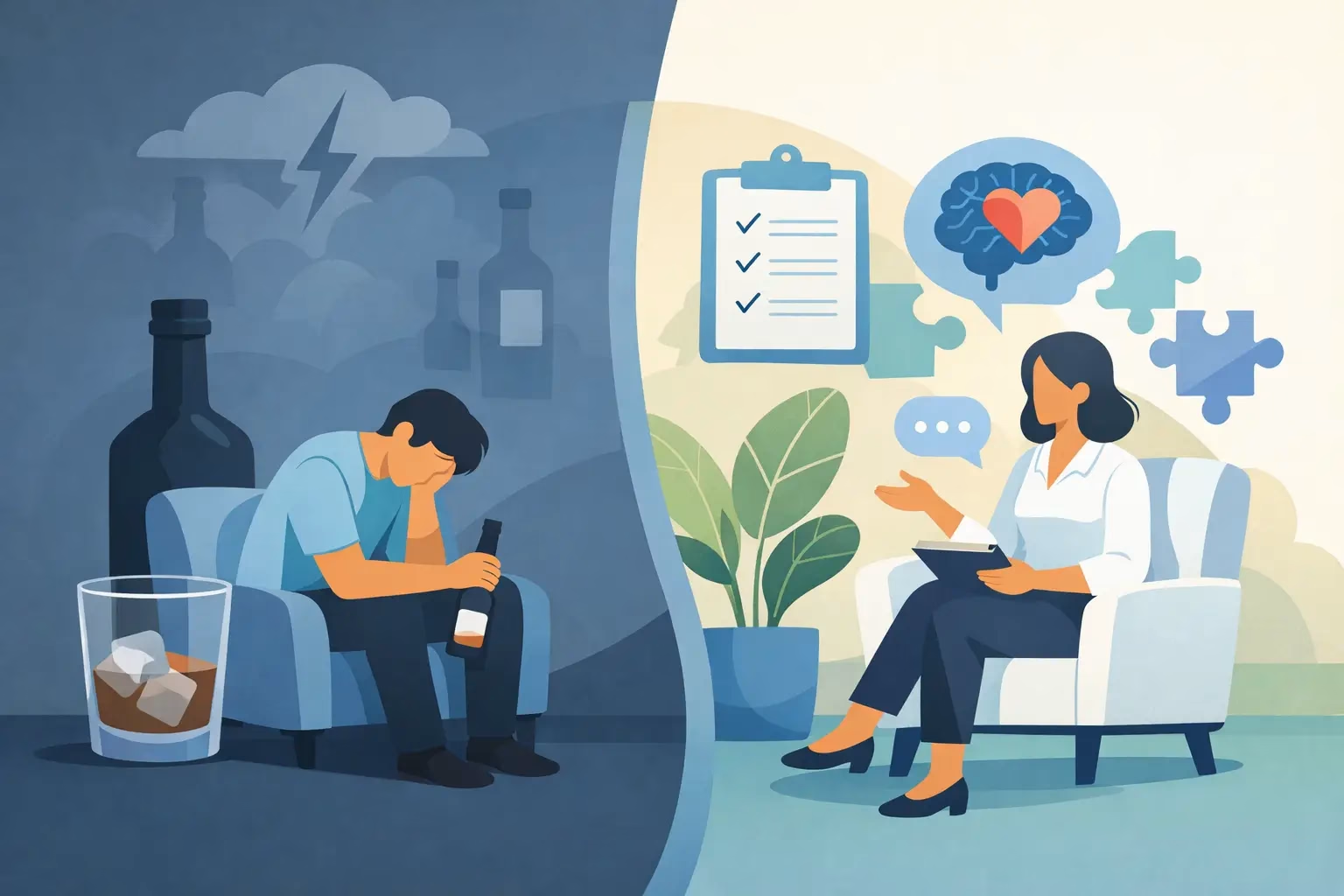
Imagine someone called Daniel. He is 38, works long hours, and tells himself he drinks to take the edge off. At first it was a couple of drinks in the evening. Over time, it became more regular, then more necessary. He starts planning his evenings around alcohol. He notices his sleep is worse, his mood is flatter, and his patience is thinner. He has promised himself to cut down more than once, but the pattern keeps returning.
Daniel is not sure he is “bad enough” for therapy. He feels embarrassed because part of him believes he should be able to sort it out on his own. This is often where counselling begins – not with certainty, but with discomfort, confusion, and a quiet fear that things may be slipping further than he wants to admit.
In therapy, the first task is not to shame him into stopping. It is to understand what is happening. A gentle therapist might ask when the drinking tends to happen, what usually comes before it, what he feels during it, and what the next day is like emotionally as well as physically. They may explore whether alcohol is helping him numb anxiety, soften self-criticism, avoid memories, or create temporary relief from pressure.
That slower pace matters. If Daniel has been using alcohol to cope, simply removing it without understanding the underlying distress can leave him feeling exposed. Therapy makes room for both the behaviour and the pain beneath it.
What happens in therapy for alcohol misuse?
A good therapeutic process often starts with building safety and honesty. Many people minimise their drinking at first, not because they are trying to be difficult, but because shame makes openness hard. A calm, non-pressured relationship can make it easier to speak plainly.
Daniel may begin by describing his week. He notices that drinking spikes after conflict with his partner, after difficult meetings, and on Sundays when he feels low. Over several sessions, patterns emerge. He starts to see that alcohol is less about pleasure than relief. It helps him step out of his mind for a while.
From there, therapy can work in a few directions at once. One part is practical. He might track triggers, notice urges earlier, and build alternative responses for the moments he usually reaches for a drink. Another part is emotional. He may begin to explore the pressure he carries, the way he talks to himself, and the parts of his history that make rest feel undeserved or vulnerability feel unsafe.
This is where integrative therapy can be especially helpful. Rather than forcing one rigid model, the work can adapt to the person. Some sessions may be reflective and exploratory. Others may be more structured, helping him notice patterns, challenge all-or-nothing thinking, or practise ways to regulate anxiety without alcohol.
Why one example is not the whole picture
Not everyone who misuses alcohol wants the same outcome. Some people want to stop completely. Others want to understand whether moderation is realistic for them. Some are in crisis. Others are at the earlier stage of quietly worrying that drinking is becoming too important.
Therapy needs to meet the person where they are. If a therapist pushes too hard, too quickly, the client may retreat. If the work stays too vague, nothing changes. The balance is often in helping someone become more honest with themselves while staying emotionally supported enough to keep going.
It also depends on risk. If someone is physically dependent on alcohol, stopping suddenly can be dangerous. In those cases, therapy may sit alongside medical support rather than replacing it. Counselling can still play a vital role, but it should not ignore the physical realities of withdrawal.
What therapy might help Daniel notice
As the sessions continue, Daniel begins to recognise that he drinks most when he feels trapped between expectations and exhaustion. He grew up in an environment where emotions were brushed aside, and being competent became his way of feeling safe. Alcohol gives him a brief sense of release from that constant inner demand.
This kind of insight does not magically solve the problem, but it changes the conversation. Instead of seeing himself as weak or lacking discipline, he starts to understand his drinking as a coping strategy that made sense for a while, even if it is now causing harm. That shift can reduce shame, and reduced shame often makes change more possible.
His therapist may help him build a more realistic plan. That could include identifying vulnerable times of day, changing routines that feed the habit, finding steadier ways to decompress, and talking through the part of him that resists change because drinking still feels protective. Therapy often works best when it respects that ambivalence rather than pretending it is not there.
The role of shame, secrecy, and self-criticism
Alcohol misuse often grows in secrecy. People compare themselves to worse cases, tell themselves it is not serious enough, or hide how much they are struggling because they fear being seen as irresponsible, weak, or out of control. The more shame enters the picture, the easier it becomes to keep the cycle hidden.
Therapy offers something different. It can be a place where the facts are spoken aloud without humiliation. That does not mean minimising harm. It means understanding that judgement rarely creates lasting recovery. Honest change is more likely when someone feels safe enough to be truthful.
This is especially important if alcohol is linked to trauma, bereavement, anxiety, or loneliness. In those situations, drinking is often doing emotional work. If therapy addresses only the surface habit, the deeper distress may remain untouched.
What progress can look like
Progress is not always neat. Daniel may have a good fortnight and then slip back into old patterns after a stressful week. That does not mean therapy has failed. It may mean he is learning what makes him vulnerable and what support he still needs.
Over time, progress might look like shorter drinking episodes, more awareness before acting on an urge, fewer secretive behaviours, better conversations with loved ones, or a growing ability to sit with difficult feelings without immediately escaping them. For some people, it leads to sobriety. For others, it starts with reducing harm and rebuilding trust in themselves.
A thoughtful therapist will not measure success only by perfect behaviour. They will also pay attention to honesty, self-understanding, emotional regulation, and the client’s capacity to make different choices with greater freedom.
Is therapy for alcohol misuse right for you?
If you are asking that question, something in you is already paying attention. You do not need to wait until things become unmanageable. You also do not need to arrive with a fixed label or a polished explanation. Sometimes the first step is simply admitting that your relationship with alcohol no longer feels as steady as you want it to.
At The Psychological Oasis, this kind of work can begin gently, at your own pace, with space to talk honestly about what drinking has come to mean in your life. Therapy does not have to start with pressure or long forms. It can start with a conversation.
If alcohol has become a way of getting through the day, softening the night, or keeping difficult feelings at arm’s length, you do not have to face that alone. Change often begins quietly – with one honest conversation, one less hidden evening, one moment of recognising that support is allowed.