
Clinical Supervision for Counsellors Online
Some supervisory conversations need more than a quick case update. They need space for the part you have not quite found words for yet – the stuckness with a client, the emotional residue after a difficult session, or the quiet sense that your own wellbeing is beginning to fray. Clinical supervision for counsellors online can offer that space in a way that is both accessible and genuinely containing, especially when your working week is already full.
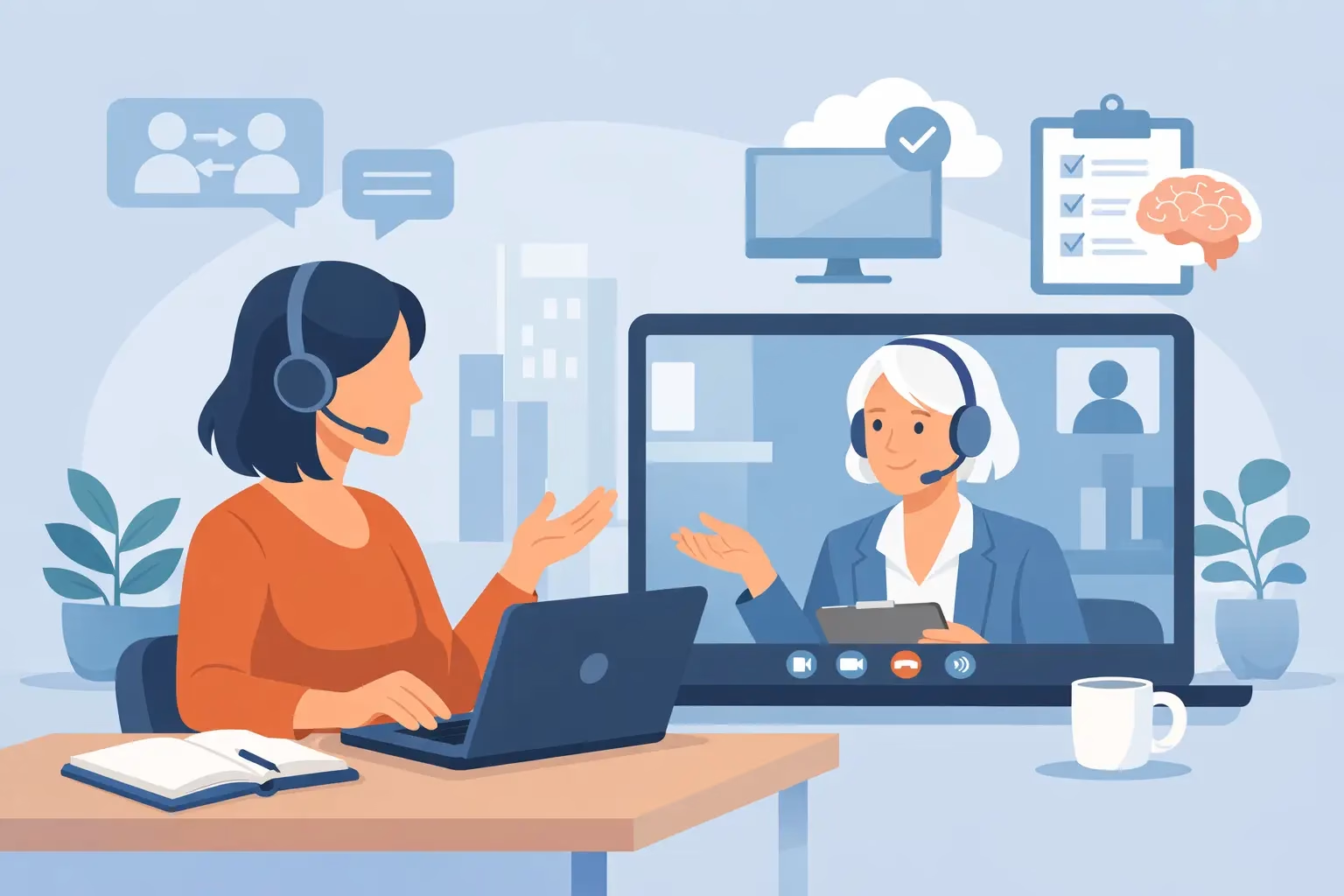
For many therapists, online supervision is no longer a second-best option. It has become a practical and relational way to think clearly, feel supported, and stay grounded in ethical practice. When it is offered well, it can feel every bit as thoughtful, connected, and useful as meeting in person.
Why clinical supervision for counsellors online works
The main advantage is often the simplest one – consistency. When supervision is easier to attend, it is easier to protect. There is no travel across London, no pressure to fit around room availability, and less chance of practical strain pushing reflective work to the edges of the month.
That matters because supervision is not just an administrative requirement. It is part of how counsellors stay psychologically resourced enough to do good work. Having a regular online space can help you pause, notice patterns, and think about your clients with the level of care they deserve.
There is also something quietly helpful about being in your own environment. Many practitioners find they are more settled joining supervision from their home office or practice room, with a cup of tea nearby and a few moments to arrive before the session starts. That familiarity can make honest reflection feel more available.
At the same time, online supervision is not automatically right for everyone. Some counsellors think and feel more freely when they are physically sharing a room with another person. Others may find screen fatigue makes it harder to stay present by the end of a long day. The question is not whether online is universally better. It is whether it supports the kind of supervisory relationship you need.
What makes online supervision feel safe and useful
The quality of supervision rests less on the platform and more on the relationship. A good supervisor will help you think about client work, of course, but they will also pay attention to how you are carrying that work. They will notice when you seem uncertain, overly responsible, avoidant, flooded, or disconnected. They will not shame those responses. They will help you understand them.
That matters particularly in online work, where it can be easy to assume the screen creates distance. In practice, thoughtful online supervision can still hold nuance, emotional depth, and challenge. The supervisor’s presence, steadiness, and ability to attune remain central.
A useful online supervisory space often includes clear boundaries, dependable scheduling, and a pace that does not feel rushed. It should be somewhere you can bring ethical questions, risk concerns, countertransference, uncertainty about endings, frustrations with clients, worries about private practice, and the parts of the work that may feel harder to say aloud.
For many counsellors, the most valuable supervision is not the kind that performs expertise. It is the kind that helps you think. That may include gentle challenge, but it should not leave you feeling judged or managed. Good supervision should strengthen both your clinical confidence and your capacity for honest self-reflection.
Clinical supervision for counsellors online and ethical practice
Online supervision can support strong ethical practice when the basics are taken seriously. Confidentiality still matters. Privacy still matters. Good note-keeping, secure technology, and careful thought about where you take calls from all form part of responsible online work.
There is also a wider ethical dimension. Supervision helps protect clients not simply because it checks compliance, but because it gives therapists a place to notice blind spots. A counsellor who has space to reflect on enactments, ruptures, rescue dynamics, dependency, burnout, or risk is usually in a better position to respond thoughtfully rather than reactively.
This is especially important for practitioners working online with their own clients. Digital therapy can raise specific questions around boundaries, location, interruptions, crisis planning, and emotional containment through a screen. Online supervision gives room to think these through with care rather than carrying them alone.
If you are newly qualified, returning after a break, or building a private practice, that support can be especially reassuring. But experienced practitioners need it too. The longer you work, the more likely it is that complexity deepens rather than disappears.
Who online supervision tends to suit best
It often suits counsellors and psychotherapists who want flexibility without losing depth. If you work from home, see clients in several locations, travel frequently, or live outside major cities, online sessions can make regular supervision much more manageable.
It can also work well for therapists who prefer a calmer, less formal process. Some practitioners find traditional settings can add pressure or make it harder to speak openly about vulnerability. An online format, held with warmth and professionalism, can feel more human and less performative.
That said, suitability depends on more than convenience. If your internet connection is unreliable, your space is not private, or you consistently feel drained by video calls, those factors deserve respect. Sometimes a hybrid approach is best. Sometimes in-person supervision remains the better fit. There is no virtue in forcing a format that does not actually support you.
What to look for in an online supervisor
Training, accreditation, and clinical experience matter, but so does the feel of the relationship. You are looking for someone whose way of working helps you become more thoughtful, more ethical, and more resourced in your practice.
It can help to ask yourself a few simple questions. Do you feel able to be honest with this person? Can you bring not just polished formulations but uncertainty, mistakes, and emotional reactions? Do they offer structure without becoming rigid? Can they support both client work and the impact of the work on you?
If you work integratively, it may be especially helpful to find a supervisor who can think flexibly rather than insisting on one fixed model. Different clients need different things, and supervision should have room for that complexity. It should also take account of the practical realities of your work, whether you are in agency settings, private practice, student placement, or a mixed caseload.
The best fit is often someone who combines clinical clarity with warmth. Someone who can challenge you when needed, while still keeping the relationship steady and respectful.
The emotional side of being supervised online
There can be a quiet relief in logging into a space where you do not have to hold it all together. Counsellors spend so much time making room for other people’s distress that their own internal process can become compressed, postponed, or intellectualised.
Online supervision can help soften that pattern when it is approached with enough care. It allows space to notice when a client’s story is brushing against your own history, when a repeated dynamic is wearing you down, or when your confidence has been knocked by a complaint, rupture, or difficult ending.
That does not mean supervision becomes personal therapy. The boundaries are different, and that distinction matters. But good supervision recognises that you are a human being in the room, not a neutral instrument. Your responses are part of the clinical picture, and they deserve thoughtful attention.
This is often where the right online supervision becomes more than convenient. It becomes restorative. Not by removing the weight of the work, but by helping you carry it more consciously.
A gentler way to approach support
If you are considering online supervision, you do not need to have everything neatly formulated before reaching out. Many therapists make contact when they are in transition – growing a practice, feeling isolated, working with more complexity, or simply recognising that their current supervision no longer fits.
At The Psychological Oasis, that first step is understood as something that can feel vulnerable. The process does not need to be overly formal to be professional. Often, what matters most is beginning with a conversation that feels calm, respectful, and clear.
The aim of supervision is not to produce a flawless therapist. It is to support safe, reflective, human practice over time. If online supervision helps you think more clearly, feel less alone in the work, and stay close to what your clients need, then it may be exactly the right place to begin – at your own pace.