
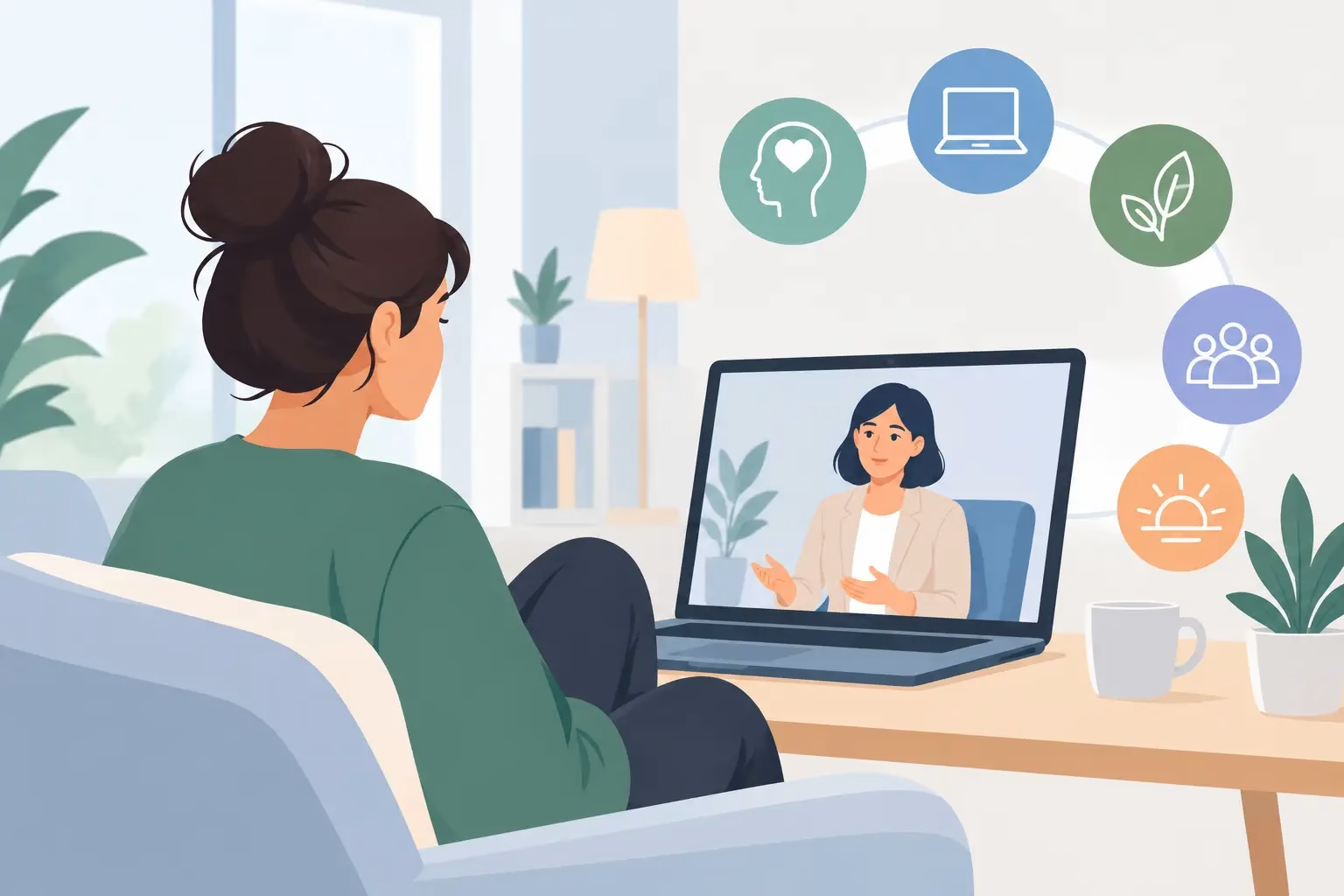
Online Therapy Trends: What Matters in 2026
For many people, the most meaningful of the current online therapy trends is not a new platform or a clever piece of technology. It is the growing expectation that getting support should feel less daunting. When you are already carrying anxiety, exhaustion, grief, shame or uncertainty, a complicated sign-up process can become one more reason to put help off.
Online therapy has helped make counselling more reachable for people who may not be able to travel, take time away from work, arrange childcare, or face the intensity of a waiting room. Yet convenience alone is not enough. The direction that matters most is towards care that remains personal, private and emotionally safe, even when it takes place through a screen.
Online therapy trends are becoming more human
Early conversations about online counselling often focused on whether it could be as effective as meeting in person. For many adults, experience has provided a more practical answer: therapy can work well online when the relationship feels secure, attentive and real.
The screen changes some things, but it does not remove the essentials of therapy. You still need to feel heard without being rushed. You still need a therapist who can make space for what is difficult to say, notice patterns with care, and work with you rather than doing therapy to you.
This is why a more relational approach is becoming increasingly valued. People are less interested in being treated as a set of symptoms or moved through a fixed process. They want support that recognises the context of their life: a demanding job, a painful relationship pattern, a history of trauma, a struggle with addiction, or simply the sense that they have lost touch with themselves.
For some, structured techniques are helpful and reassuring. For others, a less rigid space is what allows them to speak honestly. Neither preference is wrong. Good therapy makes room for individual needs rather than assuming one format suits everyone.
A gentler route into starting therapy
One clear shift is a growing resistance to impersonal intake processes. Lengthy questionnaires and clinical language can be useful in some settings, particularly where risk needs to be assessed carefully. But they can also feel overwhelming for someone who has spent years minimising their own pain or worrying that they will say the wrong thing.
A gentler beginning does not mean avoiding important questions. It means approaching them with sensitivity, explaining why they matter, and allowing a person to begin at their own pace. Often, the first step is simply having a conversation about what has brought you here and what you hope might feel different.
This matters especially for people living with low self-worth, trauma or emotional disconnection. If therapy begins with pressure, it may unintentionally repeat familiar experiences of being judged, managed or misunderstood. A calm, human first contact can make it easier to stay with the process.
Choice is becoming part of good care
Online sessions are no longer seen as a single, uniform service. People increasingly expect choices around session times, frequency, video or telephone appointments, and the pace of the work. Flexibility can be particularly valuable when life is unpredictable, whether because of caring responsibilities, shift work, chronic stress or periods of low energy.
Choice also includes the ability to ask questions before committing. It is reasonable to want to know how a therapist works, what a session might be like, how confidentiality is handled, and whether their experience feels relevant to your concerns. Therapy is a relationship, and it is okay if it takes a little time to find a practitioner who feels right.
At the same time, flexibility needs some structure. Regular appointments can create the continuity that deeper work often requires. The aim is not endless convenience, but an arrangement that is realistic enough to support commitment without becoming another source of strain.
Privacy remains central, not optional
As online support has become more common, people are rightly asking more questions about privacy. A therapy session may take place in your home, but it still deserves the same care and confidentiality as a session in a consulting room.
Practical details can make a genuine difference. A private room, headphones, a device that is not shared with others, and a reliable connection can all help you feel freer to talk. If home is not private, some people speak from a parked car, a quiet office room or another place where they can be uninterrupted. There is no perfect set-up, only what is safe and workable for you.
It is also worth asking a therapist how they protect information, what platform they use, and what would happen if a connection dropped during a difficult moment. Clear answers do not take away vulnerability, but they can reduce uncertainty. Trust is built not only through warmth, but through professional boundaries and careful handling of the practicalities.
Technology can support therapy, but it cannot replace the relationship
Artificial intelligence, wellbeing apps, mood trackers and digital self-help tools are becoming more visible in mental health conversations. Some can be useful additions. A journal prompt may help you put feelings into words. Tracking sleep or mood may reveal a pattern. A guided exercise can offer a pause during a stressful day.
But these tools have limits. They cannot fully understand the meaning behind a long silence, the complexity of a relationship, or the particular way a past experience still shapes your life. They cannot offer the steady, responsive presence that often helps people feel less alone with what they are carrying.
There is also a difference between receiving information and being accompanied through change. You may already know that you need firmer boundaries, less alcohol, more rest or greater self-compassion. The difficult part is often understanding why those changes feel so hard, and finding a way forward that does not rely on self-blame.
Technology is most helpful when it supports, rather than replaces, thoughtful human care.
More attention to burnout, trauma and emotional loneliness
Another of the important online therapy trends is the language people are using to describe distress. Many do not arrive saying, “I have a mental health problem.” They say they are constantly tired, easily irritated, numb, stuck, disconnected from their partner, or unable to switch off.
Burnout is not always solved by a better routine. Anxiety is not always eased by positive thinking. Relationship difficulties are not always about communication skills alone. Beneath these experiences there may be grief, old protective patterns, unresolved trauma, impossible expectations or years of putting everyone else first.
Online therapy can offer a place to explore these layers without having to present a polished version of yourself. It can be somewhere to speak about the things that feel too messy, embarrassing or complicated to share elsewhere. This is particularly significant for people who appear capable on the outside but feel close to overwhelmed inside.
What to look for when choosing online therapy
The growing number of online options can make choosing feel harder, not easier. Price, availability and convenience matter, but they are not the whole picture. Look for clear information about a therapist’s training, professional registration, approach and fees. You deserve to understand who you are placing your trust in.
Then pay attention to how the contact feels. Are you given space to ask questions? Does the language feel respectful and understandable? Do you feel pressured to book quickly, or invited to consider whether the support is a good fit? Your instincts are not the only measure of safety, but they are worth listening to.
For people in the UK and internationally, online counselling can remove geographical barriers while still offering a consistent therapeutic relationship. The Psychological Oasis, for example, offers an intentionally gentle route into online support, with the understanding that reaching out can be difficult enough without unnecessary formality.
Starting therapy does not require you to have the right words, a clear diagnosis or a neatly explained reason for struggling. You can begin with the simple truth of how things feel right now. A good therapeutic space can help you make sense of the rest, slowly and without having to face it alone.