
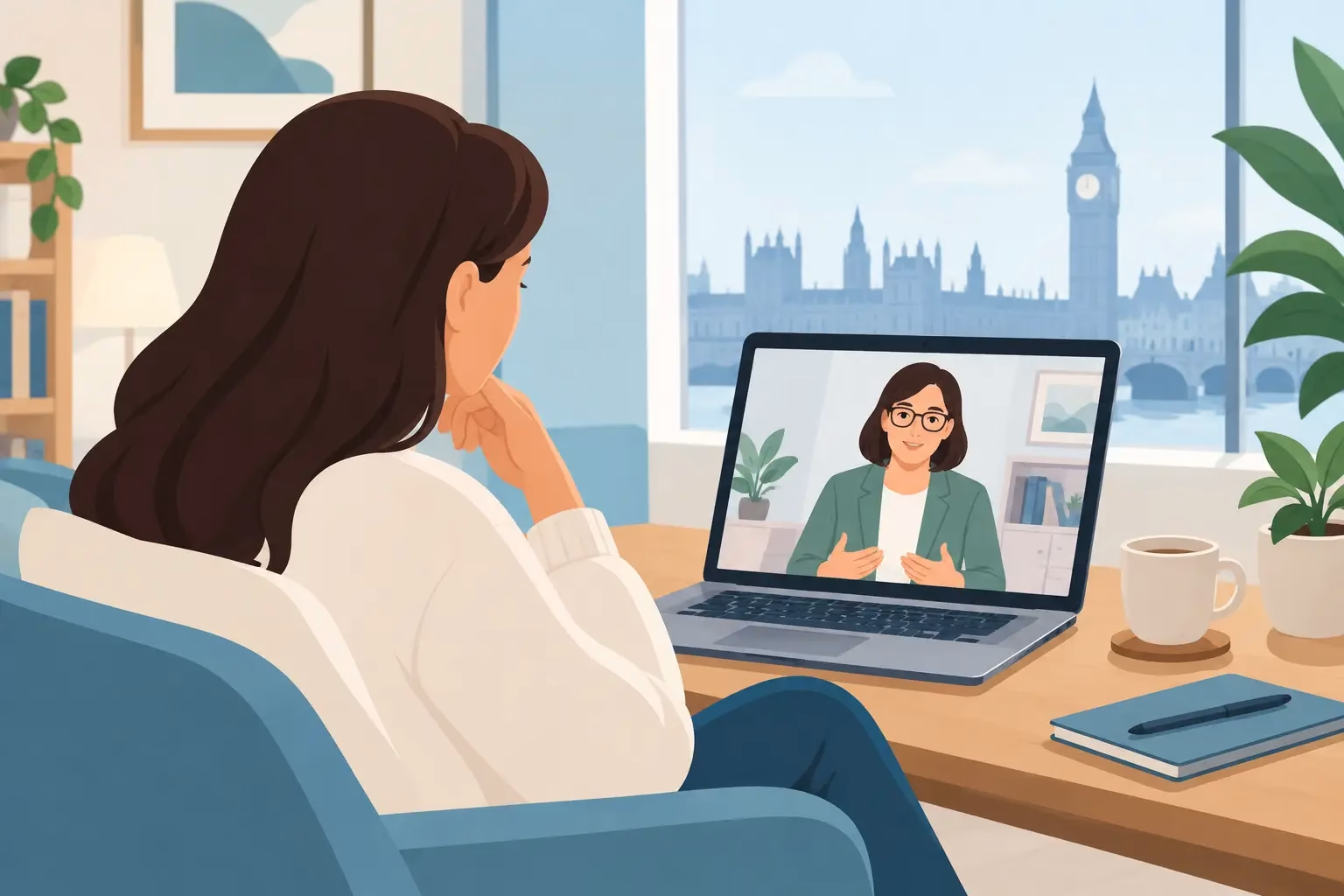
How to Find the Best Online Therapists in the UK
Finding a therapist can feel surprisingly exposing. You may already be carrying anxiety, exhaustion, grief, shame or uncertainty, then find yourself faced with profiles, qualifications, fees and unfamiliar language. The best online therapists are not simply those with the most polished websites or the longest lists of specialisms. They are practitioners who help you feel safe enough to be honest, while bringing the training, boundaries and experience your situation deserves.
Online therapy can make that search more manageable. You can speak from a private space at home, avoid travelling when life already feels full, and choose from therapists beyond your immediate area. Yet convenience alone is not the same as a good therapeutic fit. Taking a little time to understand what you need can make the first step feel less daunting.
What makes an online therapist right for you?
There is no single therapist who is best for everyone. A person dealing with panic after burnout may want something different from someone trying to understand a painful relationship pattern, stop drinking, or make sense of trauma that still feels close. The right choice depends on the concerns you bring, the kind of relationship you need, and whether the therapist’s way of working feels understandable and respectful.
Qualifications and professional registration are a sensible place to begin. In the UK, counsellors and psychotherapists may be registered or accredited with a professional body such as the British Association for Counselling and Psychotherapy (BACP), UK Council for Psychotherapy (UKCP), or the National Counselling and Psychotherapy Society (NCPS). These bodies set expectations around training, ethical practice, supervision and complaints procedures.
Registration does not guarantee that a therapist will feel right for you, but it offers an important layer of accountability. Look for clear information about their training, professional membership, approach and experience. A trustworthy therapist should be comfortable answering questions about any of these areas without making you feel awkward for asking.
It can also help to notice how a profile makes you feel. Does the language seem warm and clear, or overly technical and impersonal? Do you get a sense that there is room for your own pace? Therapy may sometimes be challenging, but it should not begin with pressure to disclose everything before you feel ready.
How to compare the best online therapists
Rather than searching for a perfect score or a universal recommendation, compare a small number of therapists against what matters most to you. A first conversation, introductory call or carefully written email exchange can tell you more than pages of testimonials.
Check their experience, without expecting a perfect match
If you know what you want support with, look for relevant experience. This might include anxiety, low self-esteem, trauma, addiction, emotional overwhelm, relationship difficulties, attachment concerns or work-related burnout. However, do not assume a therapist must have lived your exact experience to understand you well. What matters is that they can listen carefully, recognise the complexity of your situation and work within the limits of their competence.
Ask how they typically support people with similar concerns. Their response should be thoughtful rather than overly certain. Good therapy does not promise quick fixes, particularly where trauma, addiction or long-standing emotional patterns are involved.
Understand their therapeutic approach
Different approaches offer different ways into the work. Cognitive behavioural therapy, or CBT, often focuses on the connection between thoughts, feelings and behaviours. Psychodynamic therapy may explore how earlier experiences and relationships shape the present. Person-centred therapy places particular value on acceptance, empathy and your own capacity to find meaning.
Many therapists work integratively, drawing on more than one approach according to the person in front of them. This can be helpful if you do not want to be placed into a fixed method. An integrative therapist may make space for practical tools when anxiety is intense, while also exploring the deeper experiences that have made life feel difficult.
You do not need to know the terminology before beginning. It is enough to ask, “How do you tend to work?” and “What might our first few sessions be like?” The answer should leave you with more clarity, not more confusion.
Consider the practical conditions of online therapy
Online therapy works best when both sides have a reliable, confidential setting. Ask what platform is used, how your information is handled, and what happens if the connection fails mid-session. A therapist should use a suitable private platform and take confidentiality seriously, while being honest that no digital communication is entirely without risk.
Think about your own environment too. You may need headphones, a room where you are unlikely to be overheard, and an agreed plan for interruptions. If privacy at home is difficult, tell the therapist. There may be ways to plan around it, although online work is not always the right option in every circumstance.
Location still matters. A therapist based in the UK will usually work under UK professional and data-protection expectations, which may feel reassuring for UK clients. If you are living abroad and seeking English-language therapy, ask whether they can work with clients in your country and what arrangements apply. Professional rules and insurance can vary across borders.
Be clear about cost and consistency
Fees are a real part of the decision, especially when you are hoping for ongoing support. Check the session length, cancellation policy, payment arrangements and whether concessionary rates are available. Lower cost does not automatically mean lower quality, and a higher fee does not automatically create a better fit.
Consistency is often more valuable than choosing a therapist who feels financially difficult to sustain. A regular weekly session can provide a steady place to think and feel, but frequency should be discussed rather than imposed. Some people begin weekly and adjust later; others need a different arrangement because of work, caring responsibilities or finances.
Questions that can make the first contact easier
You are not interviewing a therapist in a cold or formal sense. You are checking whether you might be able to work together. A few simple questions can help:
- Are you registered or accredited with a recognised professional body?
- Have you worked with people experiencing concerns similar to mine?
- How would you describe your approach to therapy?
- What are your fees, cancellation arrangements and availability?
- How do you keep online sessions private and confidential?
- What happens if I need more specialist or urgent support?
Pay attention not only to the content of the answer, but to how it is offered. Do you feel heard? Is there space for uncertainty? A good therapist will not take it personally if you decide they are not the right person for you.
A gentle start matters more than getting it right
For many people, the hardest part is not choosing from a list. It is making contact at all. Perhaps you worry that your problems are not serious enough, that you will not know what to say, or that you have left it too late. These fears are common. You do not need a polished explanation of your life before reaching out.
A supportive first contact should be simple. You might say that you have been feeling overwhelmed, struggling in a relationship, or finding it hard to cope alone. That is enough to begin. The therapist can help you work out what feels most pressing and whether their service is appropriate.
At The Psychological Oasis, the aim is to make this early stage feel more human and less like an administrative hurdle. Therapy is offered online for adults in the UK and internationally by an accredited integrative counsellor and psychotherapist, with a calm, collaborative approach that does not require you to have all the answers at the outset.
When online therapy may not be enough on its own
Online counselling can be deeply meaningful, but it has limits. If you are at immediate risk of harming yourself or someone else, feel unable to keep yourself safe, or are experiencing a severe mental health crisis, urgent local support is needed rather than waiting for a routine therapy appointment. In the UK, you can contact emergency services on 999, call NHS 111 and select the mental health option where available, or attend A&E.
It may also be worth discussing alternatives if you have no private place for sessions, your internet access is unreliable, or you feel that being in the same room would matter greatly to your sense of safety. These are not failures. They are useful things to recognise when deciding what kind of support will serve you best.
The search for support does not have to be another burden you carry alone. Choose a therapist whose professional grounding reassures you, whose practical arrangements work for your life, and whose manner allows you to arrive as you are. A first message does not commit you to anything. It simply gives you the chance to find out whether a calmer, more supported way forward is possible.