
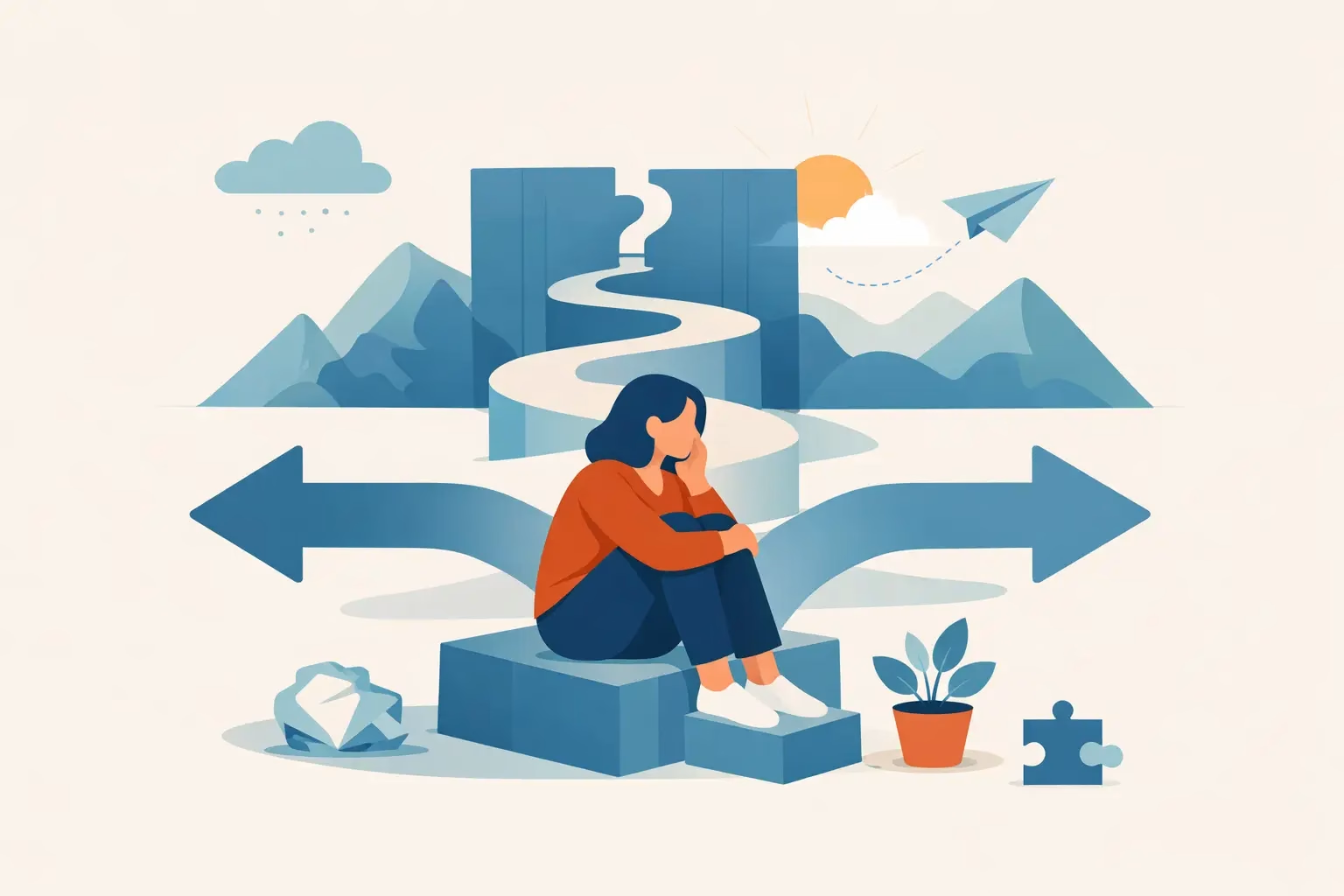
Therapy for Feeling Stuck: What Helps?
There is a particular kind of exhaustion that comes from looking as though you are coping while, underneath, everything feels paused. You might still be going to work, replying to messages, keeping things moving on the surface. But inside, something feels jammed. Therapy for feeling stuck can help when life has gone flat, repetitive or strangely heavy, and you can no longer think your way out of it on your own.
Feeling stuck is not a failure of motivation or character. Often, it is a sign that something in you needs attention, care and understanding. Sometimes that is obvious. At other times, it can be frustratingly hard to name. You may only know that you feel disconnected from yourself, trapped in the same patterns, or unable to make decisions that once felt manageable.
What feeling stuck can actually look like
People often imagine being stuck as laziness or indecision. In therapy, it usually turns out to be more layered than that. Feeling stuck can show up as overthinking every option but never acting. It can look like staying in a relationship that no longer feels right, returning to the same unhealthy coping strategies, or struggling to begin something you genuinely want.
For some people, it feels numb rather than dramatic. You may not be in obvious crisis, but you feel distant from your own life. Days pass, and very little seems to change. For others, feeling stuck comes with anxiety, shame or a constant background sense that you are getting something wrong.
This can happen in work, relationships, grief, identity, recovery, family dynamics, or after periods of burnout and trauma. It can also appear when you are trying very hard to hold everything together. In that sense, being stuck is sometimes less about not moving and more about being pulled in too many directions at once.
Why people get stuck in the first place
There is rarely one simple reason. Sometimes the mind and body are responding to prolonged stress. If you have been overwhelmed for a long time, your system may shift into survival mode. When that happens, clarity often disappears. Small decisions can start to feel huge. You may become more avoidant, more self-critical, or less able to trust yourself.
At other times, old patterns are involved. You may have learned early on to keep the peace, ignore your own needs, achieve at all costs, or stay emotionally guarded. Those strategies often make sense in the context where they first developed. Later in life, though, they can leave you feeling trapped in ways of coping that no longer fit.
Unresolved pain can also keep people stuck. Grief, trauma, rejection, addiction, or relational wounds do not always announce themselves clearly. Sometimes they sit quietly beneath the surface, shaping choices, fears and expectations. You may tell yourself you should be over it by now, while another part of you is still carrying the impact.
This is one reason therapy can be so helpful. It creates space to understand not just what is happening, but why it keeps happening.
How therapy for feeling stuck works
Therapy for feeling stuck is not about someone telling you what to do with your life. It is a collaborative process that helps you slow things down, make sense of your experience, and notice what may be keeping you in place.
That might involve looking at current pressures and practical realities. It might also involve exploring deeper emotional patterns, especially if you keep finding yourself in the same loops. Good therapy does not force one explanation. It stays curious.
In practice, this can mean paying attention to your internal world in a more honest way. You might begin to notice that what looks like procrastination is actually fear of failure. What feels like confusion may be grief. What appears to be lack of direction could be exhaustion, resentment, or a long-standing habit of living according to other people’s expectations.
Once things are named more clearly, change often becomes more possible. Not instantly, and not in a neat straight line, but with more steadiness and less self-blame.
Therapy for feeling stuck is not one-size-fits-all
This matters, because different kinds of stuckness need different kinds of support. If you are burnt out, you may need space to recover before making major decisions. If trauma is part of the picture, moving too quickly can feel overwhelming. If you are stuck in a painful relationship pattern, therapy may help you understand attachment, boundaries and the pull of familiarity.
An integrative approach can be especially useful here. Rather than squeezing your experience into a rigid method, therapy can respond to you as a whole person. That may include reflective talking therapy, emotional exploration, attention to the body’s stress responses, or practical work around boundaries and choices.
There are trade-offs. Some people want fast strategies and immediate action points. Those can help, especially when you need a starting point. But if the stuckness has been building for years, quick fixes may only skim the surface. On the other hand, endless reflection without movement can become another form of avoidance. A helpful therapy process usually holds both – understanding and change, insight and action.
What you might begin to notice in therapy
One of the first shifts is often relief. Not because everything is solved, but because you are no longer carrying it alone. Having a calm, consistent space to speak openly can reduce the pressure to keep performing or pretending that you are fine.
Over time, people often start to recognise patterns they could feel but not fully see. You may notice how often you minimise your own distress, how quickly shame takes over, or how strongly you fear disappointing others. These are not small insights. They can change the way you relate to yourself.
Therapy can also help rebuild trust in your own responses. When you have felt stuck for a long time, you may stop believing yourself. Every decision feels suspect. Every emotion gets second-guessed. A thoughtful therapeutic relationship can help you sort through what is fear, what is intuition, and what belongs to old experiences rather than the present moment.
Sometimes progress looks quiet. Better sleep. Less dread on a Sunday evening. A clearer no. A little more compassion towards yourself when you wobble. These changes may seem modest, but they often form the basis of more lasting movement.
If you are worried therapy means something is seriously wrong
Many people hesitate here. They imagine therapy is only for crisis, or that needing support means they should have coped better by now. In reality, people seek therapy for all sorts of reasons, including the simple but painful feeling that life is not flowing as it should.
You do not need to arrive with a perfect explanation. You do not need the right language. You do not even need certainty that therapy is the answer. Sometimes the starting point is simply, I do not feel like myself, and I cannot keep going like this.
That is enough.
A gentle beginning matters, especially if you have felt put off by formal or impersonal services in the past. The first step should not feel like a test. It should feel human. At The Psychological Oasis, that calm and relational approach is part of making therapy easier to begin.
When feeling stuck is a sign to reach out sooner
There are times when stuckness shades into something more serious. If you are withdrawing from people, relying more heavily on alcohol or other coping mechanisms, feeling persistently hopeless, or finding that daily life is becoming harder to manage, it is worth seeking support sooner rather than later.
The same applies if the stuckness follows trauma, bereavement, a breakup, burnout, or a major life change. People often tell themselves to push through. Sometimes that works for a while. But there is a difference between resilience and abandonment of self.
Therapy cannot remove every uncertainty. It cannot make hard choices painless. But it can help you face what is true with more support, more clarity and less shame.
If you feel stuck, you do not need to force a breakthrough on your own. Sometimes the next step is simply allowing yourself a place to pause, speak honestly, and be met with care. From there, movement often begins in a way that feels more real – and more sustainable – than pushing ever did.