
Best Therapy Options for Anxiety That Feel Right
Anxiety can make even small decisions feel loaded. You may be wondering whether therapy will help, which approach to choose, or how to explain feelings that are difficult to put into words. The best therapy options for anxiety are not necessarily the most talked about or the most structured. They are the approaches that help you feel understood, safe enough to be honest, and supported to make meaningful changes at your own pace.
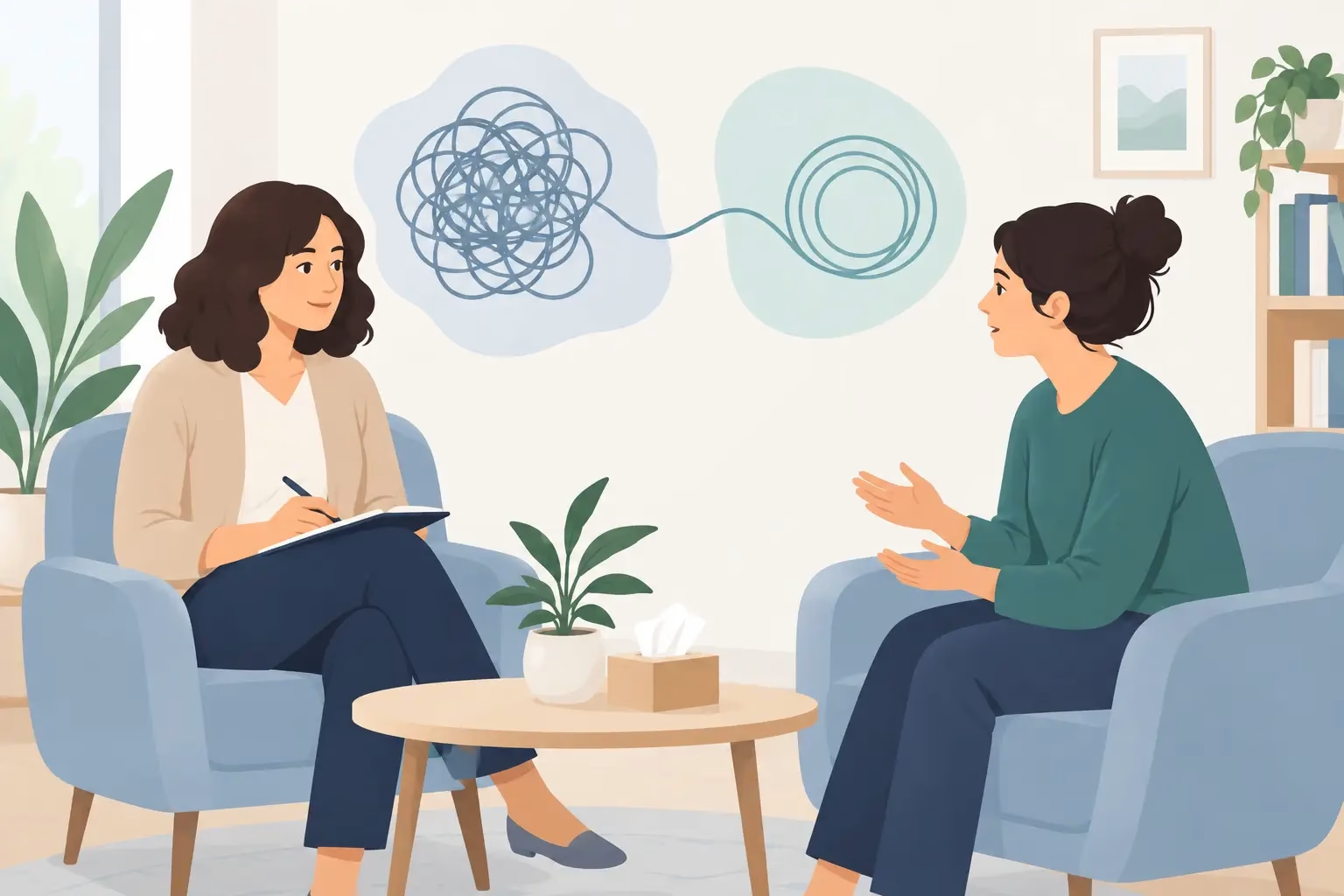
Therapy is not about being told to simply think positively or push through. It is a space to understand what anxiety is trying to communicate, how it has taken hold in your life, and what may help you feel steadier again. For some people, that means learning practical ways to respond to panic. For others, it means gently exploring long-standing experiences, relationships, or pressures that have left their nervous system feeling constantly on alert.
Why there is no single best therapy for anxiety
Anxiety is not one experience. It may show up as relentless worry, panic attacks, social anxiety, a fear of being judged, intrusive thoughts, poor sleep, physical tension, or an inability to switch off. It can also sit alongside burnout, low self-worth, trauma, grief, addiction, or difficulties in close relationships.
This is why one-size-fits-all advice can feel unhelpful. A short, focused approach may be right when a specific fear is disrupting your daily life. A more exploratory therapy may feel more appropriate if anxiety has been present for years, is connected to painful experiences, or leaves you feeling emotionally disconnected from yourself.
The relationship with your therapist matters as much as the model they use. You should not have to perform, find the perfect words, or share more than you are ready to share. A good therapeutic relationship gives you room to be uncertain and helps you approach difficult feelings without shame.
Best therapy options for anxiety
Cognitive behavioural therapy (CBT)
CBT is often recommended for anxiety because it focuses on the connection between thoughts, feelings, physical sensations, and behaviour. It can help you notice anxious patterns, such as assuming the worst, avoiding situations, seeking repeated reassurance, or treating every uncomfortable feeling as a sign of danger.
A CBT therapist may support you to test anxious predictions more realistically and gradually face situations you have been avoiding. For example, someone with social anxiety might begin by examining the belief that they will embarrass themselves, then work towards manageable social steps rather than withdrawing completely.
This approach can be useful if you would like clear tools and a focused way of working. However, CBT may feel too narrow on its own for someone whose anxiety is closely tied to trauma, attachment wounds, grief, or a deep sense of not being good enough. It does not have to be an either-or choice. CBT-informed techniques can sit alongside a more relational and exploratory therapy.
Integrative counselling and psychotherapy
Integrative therapy draws on more than one therapeutic approach, adapting the work to the person rather than expecting the person to fit a fixed method. This can be particularly helpful when anxiety has several layers: practical pressures in the present, difficult relationship patterns, and experiences from the past that still shape how safe life feels.
In an integrative approach, there may be space for practical coping strategies, thoughtful reflection, and attention to what happens between you and your therapist. You might explore why certain situations trigger such a strong reaction, while also finding ways to manage the immediate physical intensity of anxiety.
This can suit people who do not want therapy to feel overly clinical or rushed. It allows the work to change as your needs change. Some weeks, you may need grounding and support with a current problem. At other times, you may want to understand the deeper roots of your anxiety.
Person-centred therapy
Person-centred therapy places the relationship at the heart of the work. Rather than directing the session or treating you as a set of symptoms, the therapist offers empathy, acceptance, and careful attention to your experience.
For people who have spent a long time feeling criticised, misunderstood, or responsible for everyone else, this can be quietly powerful. Anxiety often grows where there has been little room to have needs, make mistakes, or express difficult emotions. Being listened to without judgement can help restore trust in your own feelings and decisions.
Person-centred therapy may be a good fit if you are unsure where to begin and want space to speak freely. It can feel less prescriptive than CBT, which some people find relieving, though others may prefer more structure alongside the emotional support.
Psychodynamic therapy
Psychodynamic therapy looks at how earlier experiences and unconscious patterns may influence present-day anxiety. It does not assume that every anxious feeling comes from childhood, but it recognises that our past relationships and experiences can shape how we respond to closeness, conflict, uncertainty, success, or loss.
You may notice, for instance, that a routine message from a manager brings a level of fear that seems disproportionate, or that you feel responsible for keeping everyone around you happy. Psychodynamic work can help make sense of these patterns with curiosity rather than blame.
This approach can be valuable when anxiety feels repetitive, difficult to explain, or tied to relationship difficulties and self-esteem. It is usually less focused on immediate symptom-management, although a thoughtful therapist will still help you feel contained and supported in the present.
Compassion-focused and mindfulness-based approaches
Some anxiety is fuelled by a harsh inner voice. You may cope by criticising yourself for worrying, comparing yourself to others, or believing you should be able to manage alone. Compassion-focused therapy helps develop a kinder, more balanced inner response, especially where shame and self-criticism are keeping anxiety active.
Mindfulness-based approaches can help you notice thoughts and bodily sensations without immediately reacting to them. This is not about emptying your mind or forcing yourself to feel calm. It is about creating a little more space between an anxious thought and the actions it pushes you towards.
These approaches can be helpful additions to therapy, particularly for people who feel caught in overthinking. Yet mindfulness is not always comfortable, especially when trauma or dissociation is present. A therapist can help you use grounding practices in a way that feels safe rather than overwhelming.
How to choose an anxiety therapist
It is reasonable to ask how a therapist works, whether they have experience of anxiety, and what a first session might be like. You are not being difficult by wanting clarity. You are deciding whether the space feels safe enough for you.
Look for an appropriately qualified, registered therapist who can explain their approach in plain language. In the UK, many people seek a practitioner registered with a recognised professional body, such as the BACP. Registration does not guarantee a perfect match, but it does indicate that the therapist works within professional and ethical standards.
It may help to notice how you feel after an initial conversation. You do not need instant certainty or a dramatic sense of connection. But you should feel respected, not pressured, and able to imagine speaking honestly over time. If the fit does not feel right, it is okay to try someone else. Therapy is personal, and finding the right person can take care.
Online therapy for anxiety
Online counselling can make therapy more accessible when anxiety makes travel, busy waiting rooms, or unfamiliar places feel difficult. Meeting from a private, familiar setting may help you feel more settled, particularly at the beginning.
It also has practical advantages for people with demanding work, caring responsibilities, health limitations, or lives split across different locations. The main consideration is privacy. A quiet room, headphones, and a reliable connection can help create a space that feels contained. If privacy at home is difficult, this is worth discussing openly with a therapist.
A gentle place to begin
You do not need to have your anxiety neatly explained before you seek support. You can begin with something as simple as, “I am struggling to cope with how anxious I feel.” A compassionate therapist can help you take it from there, without lengthy forms, pressure to disclose everything at once, or an expectation that you should already know what you need.
If anxiety is leaving you at immediate risk of harming yourself or someone else, seek urgent help through 999, go to A&E, or contact NHS 111 for urgent mental health guidance. For ongoing anxiety, reaching out for therapy can be a quieter but equally meaningful act of care. You do not have to face it alone, and you do not have to solve it all before taking the first step.