
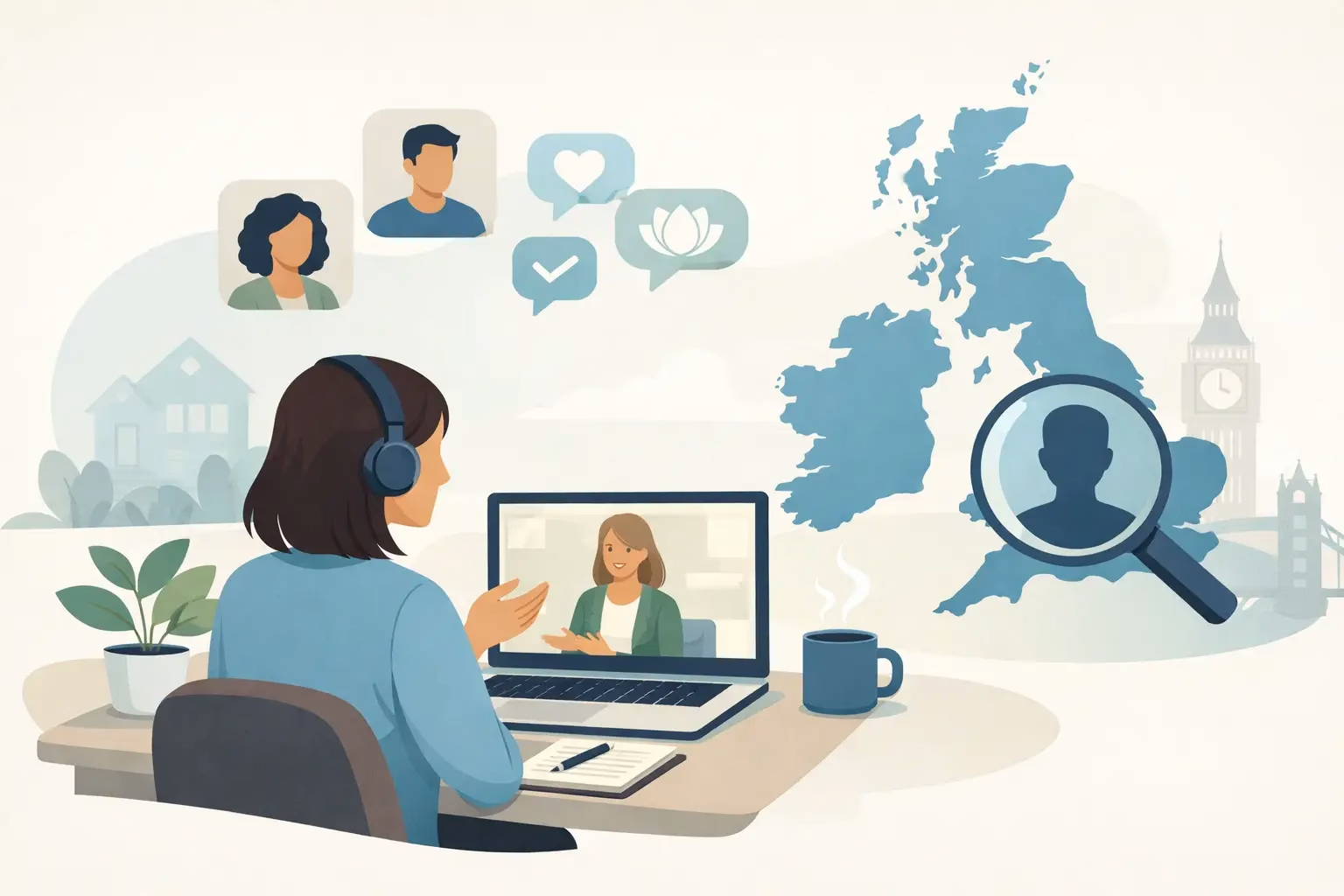
Choosing an Online Integrative Counsellor UK
Starting therapy can feel strangely hard, even when part of you knows you need support. If you are looking for an online integrative counsellor that clients in the UK can speak to from home, you may already be carrying a lot – anxiety, burnout, relationship strain, grief, trauma, addiction, or simply the quiet exhaustion of holding too much on your own.
For many people, the hardest part is not therapy itself. It is getting past the fear of being judged, rushed, or asked to explain everything before trust has had a chance to grow. That is why the way therapy begins matters. When support feels calm, human and clear, it becomes easier to take the first step.
What an online integrative counsellor in the UK actually does
An integrative counsellor does not rely on one rigid method for every person. Instead, they draw thoughtfully from different therapeutic approaches and shape the work around you, your history, your needs and your pace. In practice, that often means therapy feels more collaborative and less formulaic.
One person may need space to talk through present-day stress and emotional overwhelm. Another may want to understand patterns in relationships, attachment wounds, or the longer shadow of trauma. Someone else may be trying to make sense of compulsive behaviours, addiction, shame or low self-worth. Integrative therapy allows room for all of this.
Working online does not make the therapy less real. In many cases, it helps people feel safer. Speaking from your own home can reduce the pressure that sometimes comes with travelling to an unfamiliar room, sitting in a waiting area, or trying to hold yourself together on the journey back. Online therapy can offer privacy, continuity and a greater sense of control.
Why people look for an online integrative counsellor UK-wide
There are practical reasons, of course. Online sessions make therapy accessible whether you live in London, Manchester, Glasgow, Cardiff, a rural area, or you travel often for work. It can also make ongoing support more manageable around parenting, health issues, shift patterns or periods of low energy.
But the appeal is not only practical. Many people want therapy that feels less institutional. They are not looking to be processed. They want to speak to someone who listens carefully, works relationally, and does not reduce their life to a checklist.
This matters especially if you already feel overwhelmed. When your nervous system is stretched, even simple admin can feel like too much. A gentler beginning – one that allows for uncertainty and does not demand perfect self-explanation – can make therapy feel possible.
What integrative therapy can help with
An online integrative counsellor may support a wide range of difficulties, but it is often most useful when life feels layered rather than neat. You may be dealing with anxiety and also relationship struggles. Burnout and also unresolved grief. Addiction and also trauma. Low self-esteem and also a long history of feeling emotionally unseen.
Integrative work recognises that people do not come in tidy categories. Emotional pain usually has context. Patterns often have roots. Coping strategies that now cause harm may once have helped you survive. Therapy can make space for that complexity without turning you into a problem to be fixed.
That does not mean the work is vague. Good therapy should still feel purposeful. You might be looking for relief, better emotional regulation, stronger boundaries, a clearer sense of self, or a different relationship with fear, anger, shame or loss. The approach may be flexible, but it should remain grounded.
How online counselling feels in practice
A lot of people worry that online therapy will feel awkward or impersonal. Sometimes the first few minutes do feel unfamiliar, particularly if you have never had counselling before. That is normal. Most people settle once the pressure to perform drops away.
A good online session is not about saying the right thing. It is about having enough safety to be honest. Some sessions may be reflective and spacious. Others may be more focused and practical. At times you may talk freely. At other times you may need help finding words for something that has sat in the body for years.
There are also trade-offs. Online work can be wonderfully accessible, but it depends on having a private space and a reliable connection. Some people miss the containment of being physically in the therapy room. Others find they open up more easily online than they ever expected. It depends on your preferences, your home environment, and what helps you feel emotionally secure.
What to look for in an online integrative counsellor UK clients can trust
Qualifications and professional registration matter. In the UK, many people look for a counsellor or psychotherapist who is registered with a recognised professional body such as the BACP. That does not guarantee the relationship will be right, but it does offer a level of accountability and ethical framework.
Just as important is the way the therapist speaks about their work. Do they sound steady and approachable? Do they make therapy feel human? Can you imagine bringing your real self into the room, including the parts that feel ashamed, confused or guarded?
It is also worth noticing whether their approach feels too rigid. Some people want a clearly structured model, and that can be helpful. But if your life feels complex or your needs do not fit neatly into one box, an integrative therapist may offer more range. The aim is not to find someone who promises a perfect method. It is to find someone whose way of working gives you enough trust to begin.
A gentle first step matters more than people realise
Many therapy services unintentionally make first contact harder than it needs to be. Long forms, impersonal screening, or language that feels overly clinical can increase anxiety rather than reduce it. If you are already unsure about reaching out, that kind of process can be enough to stop you altogether.
A more compassionate beginning respects that starting therapy takes courage. You may not know exactly what is wrong. You may not have a neat summary of your childhood, your relationships, or your coping strategies. You may simply know that something does not feel sustainable anymore.
That is enough. Therapy can start there.
Practices such as The Psychological Oasis place particular care on making this stage feel calmer and less pressured, which can be especially helpful for people who have been putting off support for a long time. The point is not to remove professionalism. It is to make professionalism feel safer and more human.
Questions you may be holding before you start
You may be wondering whether your difficulties are serious enough for therapy. They do not need to reach a dramatic threshold. If something is affecting your wellbeing, relationships, sense of self or ability to cope, it deserves attention.
You may also wonder whether online therapy can really help with trauma, addiction, or long-standing emotional patterns. Sometimes it can, very effectively. Sometimes additional support is needed alongside counselling, depending on risk, complexity or practical circumstances. A thoughtful therapist will be honest about that and discuss what is most appropriate rather than simply trying to fit everything into one service.
And you may be asking the question underneath all the others – what if I start and cannot do it properly? There is no proper way to come to therapy. You can come uncertain, sceptical, tearful, numb, articulate, embarrassed, exhausted or hopeful. You can come exactly as you are.
Finding support that feels right for you
When you are choosing an online integrative counsellor UK-based, look beyond polished wording. Notice whether the therapist seems able to hold complexity without making things feel heavy or confusing. Notice whether their presence feels calm enough for honesty. Notice whether they offer expertise without hiding behind distance.
Therapy is not about being given perfect answers. It is about having a place where your inner life can be met with care, skill and steadiness. Over time, that can help you understand yourself more clearly, soften patterns that no longer serve you, and feel less alone with what you have been carrying.
If you have been hesitating, it may help to remember that reaching out does not commit you to telling your whole story at once. It simply opens a door. And sometimes that small, quiet beginning is where real change starts.